21-Day Mediterranean Diet Meal Plan For Beginners – our Path to Lifelong Health
Imagine eating delicious, satisfying meals every day while simultaneously improving your heart health, boosting your energy, sharpening your mind, and potentially adding years to your life.
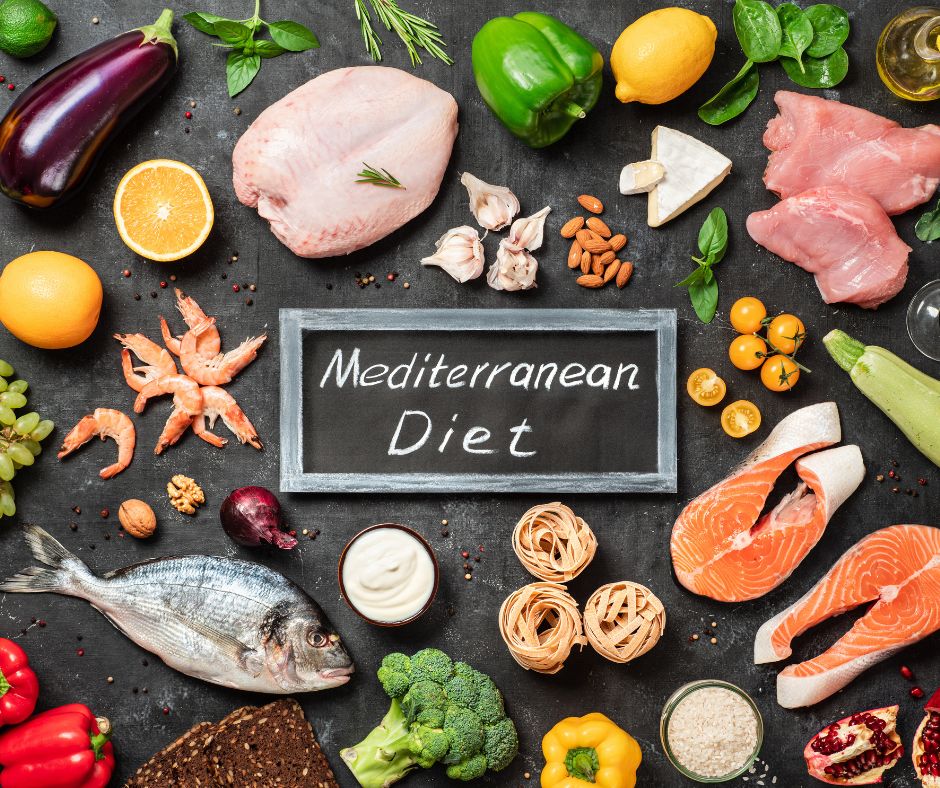
This isn’t a fantasy or an empty promise—it’s the scientifically proven reality of the Mediterranean diet, one of the most studied and celebrated eating patterns in the world.
Unlike restrictive fad diets that leave you hungry, frustrated, and inevitably returning to old habits, the Mediterranean diet represents a sustainable lifestyle rooted in centuries of cultural tradition and backed by decades of rigorous scientific research.
It’s not about counting calories, eliminating entire food groups, or suffering through bland, unsatisfying meals. Instead, it’s about embracing a way of eating that celebrates fresh, whole foods, healthy fats, and the simple pleasure of sharing meals with people you love.
If you’re reading this guide, you’re likely tired of yo-yo dieting, confused by conflicting nutrition advice, or simply searching for a healthier way to nourish your body.
Perhaps you’ve heard about the Mediterranean diet’s impressive health benefits—reduced risk of heart disease, stroke, diabetes, and even Alzheimer’s disease—and you’re ready to experience these benefits for yourself.
This comprehensive 21-day meal plan is specifically designed for beginners who want to transition to Mediterranean eating patterns without feeling overwhelmed or confused. Over the next three weeks, you’ll learn exactly what to eat, when to eat it, and how to prepare simple, delicious Mediterranean meals using readily available ingredients. More importantly, you’ll develop the knowledge, skills, and confidence necessary to make this way of eating a permanent part of your life.
The journey begins now, and it starts with understanding exactly what makes the Mediterranean diet so uniquely powerful for human health.
What Is the Mediterranean Diet? Understanding the Basics
The Mediterranean diet isn’t a “diet” in the traditional sense—it’s a way of eating and living that reflects the traditional food patterns of countries bordering the Mediterranean Sea, including Greece, Italy, Spain, southern France, and parts of North Africa and the Middle East.
These populations have historically demonstrated remarkable longevity, lower rates of chronic disease, and better quality of life compared to many Western populations.
The Core Principles
At its heart, the Mediterranean diet is built on these fundamental principles:
Plant Foods Are the Foundation Every Mediterranean meal centers around vegetables, fruits, whole grains, legumes, nuts, and seeds. These plant foods provide the bulk of calories, fiber, vitamins, minerals, and protective phytonutrients. Unlike Western eating patterns where animal proteins dominate the plate, Mediterranean meals use plant foods as the stars and animal proteins as supporting actors.
Olive Oil Is Your Primary Fat Extra virgin olive oil replaces butter, margarine, and other less healthy fats in Mediterranean cooking. Rich in monounsaturated fats and powerful antioxidants called polyphenols, high-quality olive oil is both a cooking medium and a finishing touch that adds distinctive flavor and impressive health benefits to every dish.
Fish and Seafood Take Center Stage Fish appears on Mediterranean tables at least twice weekly, providing high-quality protein and those crucial omega-3 fatty acids that support heart health, brain function, and reduce inflammation throughout the body. The Mediterranean’s proximity to the sea made fish a natural dietary staple, and this tradition continues to provide remarkable health benefits.
Herbs and Spices Provide Flavor Instead of relying on salt or heavy sauces, Mediterranean cooking uses fresh and dried herbs and spices generously. Basil, oregano, rosemary, thyme, garlic, and numerous other seasonings create intensely flavorful dishes without excess sodium or unhealthy additives.
Moderate Amounts of Poultry, Eggs, and Dairy These foods appear in Mediterranean eating patterns but in more modest quantities than in typical Western diets. Dairy products, particularly yogurt and cheese, are often consumed in fermented forms that provide beneficial probiotics along with protein and calcium.
Red Meat Is Occasional Traditional Mediterranean eating includes red meat only a few times per month rather than daily or weekly. When consumed, it’s typically grass-fed and served in smaller portions, treated as a special occasion food rather than an everyday staple.
Fresh Fruit Is Nature’s Dessert Sweet, ripe fruit serves as the typical end to Mediterranean meals, providing natural sweetness along with vitamins, minerals, and fiber. Elaborate desserts are reserved for special celebrations rather than daily indulgence.
Wine in Moderation (Optional) Traditional Mediterranean cultures often include moderate wine consumption with meals—typically one glass for women and one to two glasses for men. However, wine is absolutely not required to achieve the health benefits of Mediterranean eating, and those who don’t drink alcohol can enjoy all the same advantages.
What Makes It Different From Other Diets?
The Mediterranean diet stands apart from modern dietary approaches in several crucial ways:
It’s Based on Real-World Evidence: Unlike diets created in laboratories or for commercial purposes, the Mediterranean diet evolved naturally from populations that demonstrated exceptional health outcomes over centuries.
It Emphasizes Addition, Not Subtraction: Rather than focusing on what you can’t eat, the Mediterranean diet emphasizes adding more nutritious, delicious foods to your plate. This positive approach makes it psychologically easier to sustain long-term.
It Celebrates Food and Social Connection: Mediterranean cultures view meals as opportunities for connection and pleasure, not just biological necessity. This approach transforms eating from a solitary, rushed activity into a mindful, social experience that nourishes both body and spirit.
It’s Supported by Decades of Research: Thousands of scientific studies have examined the Mediterranean diet’s effects on health, consistently demonstrating benefits for cardiovascular health, cognitive function, longevity, and disease prevention.
It’s Naturally Sustainable: The Mediterranean diet doesn’t require special supplements, expensive meal replacements, or difficult-to-find exotic ingredients. It’s built on simple, whole foods that are available in most grocery stores and can be prepared with basic cooking skills.
The Science-Backed Health Benefits You’ll Experience
Understanding the “why” behind the Mediterranean diet provides powerful motivation for the “how” of implementation. The health benefits aren’t minor or theoretical—they’re substantial, scientifically proven, and potentially life-changing.
Cardiovascular Health: Protecting Your Heart
Heart disease remains the leading cause of death globally, making the Mediterranean diet’s profound cardiovascular benefits perhaps its most important advantage. The landmark PREDIMED study, one of the largest and most rigorous nutrition trials ever conducted, demonstrated that people following a Mediterranean diet had approximately 30% lower risk of major cardiovascular events compared to those following a low-fat diet.
How does it work? The Mediterranean diet improves cardiovascular health through multiple mechanisms:
- Better Cholesterol Profiles: The monounsaturated fats in olive oil increase beneficial HDL cholesterol while reducing harmful LDL cholesterol. This improved ratio protects arteries from plaque buildup.
- Reduced Inflammation: Chronic inflammation drives atherosclerosis and heart disease. The Mediterranean diet’s abundance of anti-inflammatory compounds from olive oil, fish, fruits, and vegetables helps calm this inflammation.
- Lower Blood Pressure: The diet’s emphasis on potassium-rich fruits and vegetables, combined with reduced sodium intake and increased nitric oxide production from healthy fats, naturally lowers blood pressure.
- Improved Blood Vessel Function: The polyphenols in extra virgin olive oil improve endothelial function—the health of blood vessel linings—which is crucial for maintaining healthy circulation.
Brain Health and Cognitive Protection
As populations age, protecting brain health becomes increasingly crucial. The Mediterranean diet has emerged as one of the most promising dietary approaches for maintaining cognitive function and reducing dementia risk.
Multiple large-scale studies have shown that people who follow Mediterranean eating patterns have significantly lower rates of cognitive decline and Alzheimer’s disease. The protective mechanisms include:
- Reduced Oxidative Stress: The brain is particularly vulnerable to oxidative damage due to its high metabolic activity. Antioxidants from colorful fruits and vegetables protect brain tissue from this damage.
- Anti-Inflammatory Effects: Chronic brain inflammation contributes to neurodegenerative diseases. The Mediterranean diet’s anti-inflammatory properties help maintain healthy brain function.
- Omega-3 Fatty Acids: These essential fats from fish are integral components of brain cell membranes and are necessary for optimal neurotransmitter function and healthy brain structure.
- Improved Vascular Health: Since the brain depends on healthy blood flow, the diet’s cardiovascular benefits translate directly into better brain health and reduced stroke risk.
Metabolic Health and Diabetes Prevention
Type 2 diabetes has reached epidemic proportions globally, making the Mediterranean diet’s effects on blood sugar regulation and insulin sensitivity particularly relevant. Research consistently shows that Mediterranean eating patterns reduce diabetes risk by 20-50% depending on adherence level.
The metabolic benefits occur through:
- Improved Insulin Sensitivity: The healthy fats and fiber-rich foods in the Mediterranean diet help your body use insulin more effectively, preventing the insulin resistance that leads to diabetes.
- Stable Blood Sugar: Unlike refined carbohydrates that cause blood sugar spikes and crashes, the complex carbohydrates from whole grains and legumes provide steady energy release throughout the day.
- Weight Management: While not primarily a weight-loss diet, Mediterranean eating naturally supports healthy weight management through improved satiety and food quality rather than caloric restriction.
- Reduced Inflammation: Since inflammation plays a key role in insulin resistance, the diet’s anti-inflammatory effects support better metabolic health.
Longevity and Healthy Aging
Perhaps the most compelling evidence for the Mediterranean diet comes from longevity research. Populations following traditional Mediterranean eating patterns consistently demonstrate longer life expectancies and higher rates of “successful aging”—maintaining physical function, cognitive ability, and independence well into advanced years.
The longevity benefits stem from:
- Cellular Protection: Studies have shown that Mediterranean diet adherence is associated with longer telomeres—the protective caps on chromosomes that naturally shorten with age. Longer telomeres are associated with slower biological aging.
- Comprehensive Disease Prevention: By reducing risk of heart disease, stroke, diabetes, cancer, and neurodegenerative diseases, the diet addresses the major causes of premature death and disability.
- Maintained Physical Function: The diet’s anti-inflammatory effects and nutrient density support muscle maintenance, bone health, and physical function throughout the aging process.
Cancer Prevention
While cancer is complex and multifactorial, research suggests that Mediterranean eating patterns are associated with reduced risk of several cancer types, particularly colorectal, breast, and prostate cancers.
The protective mechanisms likely include:
- Antioxidant Protection: The abundant antioxidants from fruits, vegetables, and olive oil help protect DNA from damage that can lead to cancer development.
- Anti-Inflammatory Effects: Chronic inflammation is implicated in cancer development, and the diet’s anti-inflammatory properties may help prevent this process.
- Healthy Hormone Balance: The diet’s effects on hormone levels may be particularly relevant for hormone-related cancers like breast and prostate cancer.
- Fiber and Gut Health: The high fiber content supports healthy gut bacteria and efficient waste elimination, which may protect against colorectal cancer.
Mental Health and Well-Being
Emerging research suggests that the Mediterranean diet may benefit mental health, with studies showing associations between Mediterranean eating patterns and reduced rates of depression and anxiety.
These mental health benefits may occur through:
- Reduced Brain Inflammation: Depression has been linked to chronic inflammation, and the diet’s anti-inflammatory properties may help protect against mood disorders.
- Omega-3 Fatty Acids: These essential fats play crucial roles in brain function and have demonstrated antidepressant effects in some studies.
- Gut-Brain Connection: The diet’s positive effects on gut bacteria may influence mental health through the gut-brain axis, a complex communication system between the digestive system and brain.
- Social and Cultural Factors: The Mediterranean emphasis on shared, leisurely meals may reduce stress and promote psychological well-being in ways that extend beyond direct nutritional effects.
Getting Started: Essential Foods and Kitchen Staples
Successfully adopting the Mediterranean diet begins with stocking your kitchen with the right ingredients. You don’t need to purchase everything at once—building your Mediterranean pantry is a gradual process that happens over several shopping trips.
The Mediterranean Pantry: Non-Perishable Staples
Extra Virgin Olive Oil This is your single most important purchase. Invest in high-quality extra virgin olive oil with a recent harvest date. Look for oil in dark glass bottles or tins that protect it from light. True extra virgin olive oil should have a fresh, fruity aroma and a slightly peppery finish. You’ll use this daily for cooking, dressings, and finishing dishes.
Whole Grains Stock your pantry with a variety of whole grains including brown rice, quinoa, farro, bulgur wheat, and whole wheat pasta. These provide the complex carbohydrates that give you sustained energy throughout the day.
Legumes Keep both dried and canned varieties of chickpeas, white beans, lentils, and black beans on hand. Canned legumes offer convenience for quick meals, while dried varieties provide better texture and flavor when you have time for proper preparation.
Canned Tomatoes and Tomato Products Quality canned tomatoes are essential for Mediterranean cooking. Stock diced tomatoes, crushed tomatoes, and tomato paste. Look for products with minimal added ingredients—just tomatoes and perhaps salt.
Nuts and Seeds Raw almonds, walnuts, pine nuts, pistachios, sesame seeds, and sunflower seeds provide healthy fats, protein, and satisfying crunch. Store these in the refrigerator or freezer to maintain freshness.
Vinegars Red wine vinegar, balsamic vinegar, and sherry vinegar are Mediterranean staples that add brightness and depth to dressings and dishes.
Herbs and Spices Essential dried herbs include oregano, basil, thyme, and rosemary. Stock spices like cumin, coriander, cinnamon, and paprika. While dried herbs work well, fresh herbs will elevate your cooking significantly.
Olives and Capers Keep jars of kalamata olives, green olives, and capers in your pantry. These provide salty, briny flavors characteristic of Mediterranean cuisine.
Fresh Ingredients: Shopping Weekly
Vegetables The backbone of Mediterranean eating includes tomatoes, cucumbers, bell peppers, zucchini, eggplant, leafy greens (spinach, arugula, kale), onions, and garlic. Buy what’s in season for the best flavor and value.
Fruits Stock citrus fruits (lemons, oranges), berries, apples, grapes, and seasonal fruits. Fresh fruit serves as snacks, breakfast components, and natural desserts.
Fish and Seafood Purchase fresh or frozen fish at least twice weekly. Salmon, sardines, mackerel, cod, and shrimp are excellent choices. Frozen fish is often flash-frozen immediately after catch, preserving quality and nutrients.
Dairy Products Greek yogurt (plain, full-fat), feta cheese, Parmesan, and fresh mozzarella are Mediterranean dairy staples. Choose full-fat varieties for better satiety and nutrient absorption.
Eggs Keep a dozen eggs on hand for quick protein-rich breakfasts and versatile meal components.
Fresh Herbs Parsley, basil, dill, mint, and cilantro add brightness and authentic Mediterranean flavor to dishes. Buy fresh herbs weekly and store them properly to extend their life.
The 21-Day Mediterranean Meal Plan: Week by Week
This comprehensive meal plan gradually introduces Mediterranean eating patterns over three weeks. Week one focuses on familiar foods prepared with Mediterranean principles. Week two expands your ingredient repertoire and cooking techniques. Week three introduces more authentic and adventurous Mediterranean dishes.
Each day includes breakfast, lunch, dinner, and two snacks, providing approximately 1,800-2,000 calories—suitable for most adults.
Adjust portion sizes based on your individual needs, activity level, and health goals.
Week 1: Foundation Building (Days 1-7)
Starting simple with familiar ingredients and basic Mediterranean principles
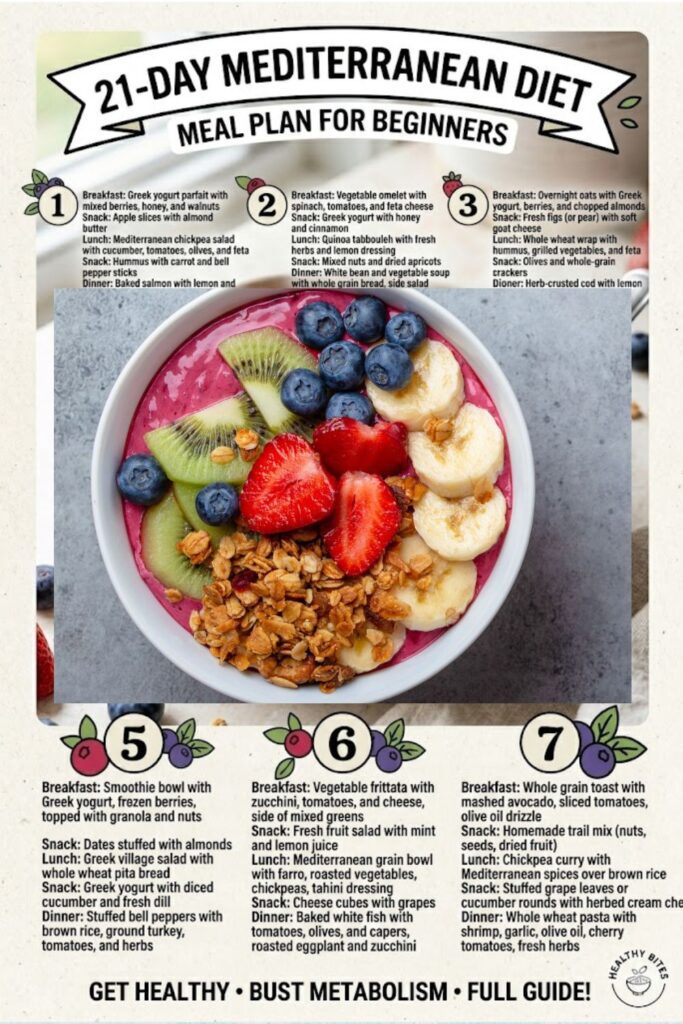
Day 1
Breakfast: Greek yogurt parfait with mixed berries, honey, and walnuts
Snack: Apple slices with almond butter
Lunch: Mediterranean chickpea salad with cucumber, tomatoes, olives, and feta
Snack: Hummus with carrot and bell pepper sticks
Dinner: Baked salmon with lemon and herbs, roasted vegetables, quinoa
Day 2
Breakfast: Vegetable omelet with spinach, tomatoes, and feta cheese
Snack: Greek yogurt with honey and cinnamon
Lunch: Quinoa tabbouleh with fresh herbs and lemon dressing
Snack: Mixed nuts and dried apricots
Dinner: White bean and vegetable soup with whole grain bread, side salad
Day 3
Breakfast: Overnight oats with Greek yogurt, berries, and chopped almonds
Snack: Fresh figs (or pear) with soft goat cheese
Lunch: Whole wheat wrap with hummus, grilled vegetables, and feta
Snack: Olives and whole-grain crackers
Dinner: Herb-crusted cod with lemon potatoes and steamed broccoli
Day 4
Breakfast: Greek yogurt bowl with granola, berries, and drizzle of honey
Snack: Orange slices with raw almonds
Lunch: Lentil and vegetable salad with lemon-olive oil dressing
Snack: Roasted chickpeas
Dinner: Grilled chicken breast with herbs, brown rice pilaf, sautéed spinach
Day 5
Breakfast: Smoothie bowl with Greek yogurt, frozen berries, topped with granola and nuts
Snack: Dates stuffed with almonds
Lunch: Greek village salad with whole wheat pita bread
Snack: Greek yogurt with diced cucumber and fresh dill
Dinner: Stuffed bell peppers with brown rice, ground turkey, tomatoes, and herbs
Day 6
Breakfast: Vegetable frittata with zucchini, tomatoes, and cheese, side of mixed greens
Snack: Fresh fruit salad with mint and lemon juice
Lunch: Mediterranean grain bowl with farro, roasted vegetables, chickpeas, tahini dressing
Snack: Cheese cubes with grapes
Dinner: Baked white fish with tomatoes, olives, and capers, roasted eggplant and zucchini
Day 7
Breakfast: Whole grain toast with mashed avocado, sliced tomatoes, olive oil drizzle
Snack: Homemade trail mix (nuts, seeds, dried fruit)
Lunch: Chickpea curry with Mediterranean spices over brown rice
Snack: Stuffed grape leaves or cucumber rounds with herbed cream cheese
Dinner: Whole wheat pasta with shrimp, garlic, olive oil, cherry tomatoes, fresh herbs
Week 2: Expanding Horizons (Days 8-14)
Introducing more variety and authentic Mediterranean flavors
Day 8
Breakfast: Shakshuka-style eggs (poached in spiced tomato sauce) with whole grain bread
Snack: Labneh with fresh herbs and cucumber slices
Lunch: Fattoush salad with toasted pita, fresh vegetables, sumac dressing
Snack: Roasted red pepper hummus with vegetables
Dinner: Moroccan-spiced chicken with whole wheat couscous, dried apricots, almonds
Day 9
Breakfast: Overnight muesli with Greek yogurt, nuts, dried fruit, fresh berries
Snack: Fresh figs with ricotta and honey drizzle
Lunch: Niçoise-style salad with tuna, hard-boiled eggs, green beans, olives
Snack: Marinated olives with cheese cubes
Dinner: Mediterranean fish stew with white fish, shrimp, mussels, crusty bread
Day 10
Breakfast: Zucchini and herb frittata with goat cheese, mixed greens
Snack: Melon wrapped with prosciutto (or turkey)
Lunch: Panzanella (Italian bread salad) with tomatoes, cucumber, basil
Snack: Baba ganoush with vegetable sticks
Dinner: Ratatouille (vegetable stew) over creamy polenta, side salad
Day 11
Breakfast: White bean and herb spread on whole grain toast, sliced tomatoes, Greek yogurt with berries
Snack: Roasted almonds with dried apricots
Lunch: Three-bean Mediterranean salad with feta over mixed greens
Snack: Dates stuffed with goat cheese and pistachios
Dinner: Lemon herb salmon with farro risotto, roasted asparagus
Day 12
Breakfast: Spiced quinoa porridge with cinnamon, cardamom, nuts, dried fruit
Snack: Greek yogurt with rose water, honey, and pistachios
Lunch: Moroccan chickpea salad with dried fruit, cumin-cinnamon dressing
Snack: Spiced roasted nuts
Dinner: Za’atar crusted fish with roasted Mediterranean vegetables, quinoa pilaf
Day 13
Breakfast: Greek yogurt pancakes with fresh berries and honey
Snack: Grapes with chopped walnuts and soft cheese
Lunch: Greek orzo salad with cherry tomatoes, cucumber, olives, feta
Snack: No-bake tahini energy balls
Dinner: Stuffed eggplant with tomatoes, herbs, ground turkey (or extra vegetables)
Day 14
Breakfast: Mediterranean breakfast bowl with Greek yogurt, granola, fruit, nuts, honey
Snack: Cucumber boats filled with herbed cheese
Lunch: Quinoa-stuffed tomatoes with herbs and cheese, side salad
Snack: Fig slices with almond butter
Dinner: Paella-style brown rice with saffron, mixed seafood, chicken, vegetables
Week 3: Mastery & Authenticity (Days 15-21)
Traditional Mediterranean dishes and advanced flavor combinations
Day 15
Breakfast: Menemen (Turkish scrambled eggs with tomatoes and peppers), whole grain bread
Snack: Turkish coffee with almond-stuffed dates
Lunch: Spanakopita-inspired salad with spinach, feta, pine nuts, dill
Snack: Muhammara (red pepper walnut dip) with vegetables
Dinner: Braised vegetables Mediterranean-style over polenta with gremolata
Day 16
Breakfast: Sicilian caponata on whole grain toast with poached egg
Snack: White bean puree with herbs and crackers
Lunch: Pissaladière-inspired flatbread with caramelized onions, olives, anchovies
Snack: Spanish Marcona almonds with Manchego cheese
Dinner: Provençal fish soup (bouillabaisse-style) with aioli and crusty bread
Day 17
Breakfast: Ricotta and herb pancakes with sautéed cherry tomatoes
Snack: Tapenade with olive and preserved lemon, served with vegetables
Lunch: Farro salad with roasted beets, carrots, goat cheese, balsamic vinaigrette
Snack: Labneh balls marinated in olive oil with herbs
Dinner: Moroccan lamb tagine with root vegetables, dried fruit, couscous
Day 18
Breakfast: Greek yogurt with Greek honey, pistachios, cinnamon, fresh fruit
Snack: Stuffed grape leaves (dolmas) with rice and herbs
Lunch: Cretan dakos (barley rusk with tomatoes, olive oil, cheese)
Snack: Turkish delight with nuts
Dinner: Greek baked fish (psari plaki) with tomatoes, roasted potatoes, boiled greens
Day 19
Breakfast: Socca (chickpea flour pancake) with sautéed vegetables and yogurt
Snack: Aged cheese with quince paste and crackers
Lunch: Panzanella with burrata cheese, tomatoes, herbs
Snack: Roasted pepper and anchovy crostini
Dinner: French white bean stew (cassoulet-style) with vegetables, crusty bread
Day 20
Breakfast: Shakshuka verde (green version with spinach and herbs), whole grain bread
Snack: Grilled halloumi cheese with watermelon
Lunch: Elevated Salade Niçoise with quality tuna, anchovies, olives, eggs
Snack: Greek yogurt layered with honey, nuts, cinnamon (baklava-inspired)
Dinner: Saffron seafood risotto with mixed seafood, arugula salad
Day 21
Breakfast: Mediterranean breakfast platter with yogurt, fruit, nuts, olives, cheese, whole grain bread
Snack: Small meze platter (hummus, olives, cheese, vegetables)
Lunch: Ultimate Mediterranean grain bowl with farro, roasted vegetables, legumes, tahini-lemon dressing
Snack: Affogato (gelato with espresso) topped with almonds
Dinner: Whole roasted fish with herbs and lemon, roasted vegetables, grain pilaf, fresh fruit dessert
Complete 21-Day Meal Plan Table
| Day | Breakfast | Morning Snack | Lunch | Afternoon Snack | Dinner |
|---|---|---|---|---|---|
| 1 | Greek yogurt parfait with berries, honey, walnuts | Apple with almond butter | Mediterranean chickpea salad with feta | Hummus with vegetables | Baked salmon, roasted vegetables, quinoa |
| 2 | Vegetable omelet with spinach, tomatoes, feta | Greek yogurt with honey | Quinoa tabbouleh with herbs | Mixed nuts and dried apricots | White bean vegetable soup, whole grain bread |
| 3 | Overnight oats with Greek yogurt, berries, almonds | Fresh figs with goat cheese | Whole wheat wrap with hummus, grilled vegetables | Olives and whole-grain crackers | Herb-crusted cod, lemon potatoes, broccoli |
| 4 | Greek yogurt bowl with granola, berries, honey | Orange slices with almonds | Lentil vegetable salad, lemon dressing | Roasted chickpeas | Grilled herb chicken, brown rice pilaf, spinach |
| 5 | Smoothie bowl with yogurt, berries, granola, nuts | Dates stuffed with almonds | Greek village salad with pita | Yogurt with cucumber and dill | Stuffed bell peppers with rice and turkey |
| 6 | Vegetable frittata with zucchini, tomatoes, cheese | Fresh fruit salad with mint | Mediterranean grain bowl with farro, chickpeas | Cheese cubes with grapes | Baked fish with tomatoes, olives, eggplant |
| 7 | Avocado toast with tomatoes, olive oil | Trail mix | Chickpea curry over brown rice | Stuffed grape leaves | Whole wheat pasta with shrimp, tomatoes, herbs |
| 8 | Shakshuka-style eggs with whole grain bread | Labneh with herbs, cucumber | Fattoush salad with toasted pita | Roasted red pepper hummus | Moroccan-spiced chicken, couscous, apricots |
| 9 | Overnight muesli with yogurt, nuts, fruit | Fresh figs with ricotta | Niçoise salad with tuna, eggs, green beans | Marinated olives with cheese | Mediterranean fish stew with crusty bread |
| 10 | Zucchini herb frittata with goat cheese | Melon with prosciutto | Panzanella bread salad | Baba ganoush with vegetables | Ratatouille over polenta, side salad |
| 11 | White bean spread on toast, tomatoes, yogurt | Roasted almonds, dried apricots | Three-bean salad with feta | Dates with goat cheese, pistachios | Lemon salmon, farro risotto, asparagus |
| 12 | Spiced quinoa porridge with nuts, dried fruit | Yogurt with rose water, pistachios | Moroccan chickpea salad with spices | Spiced roasted nuts | Za’atar fish, roasted vegetables, quinoa |
| 13 | Greek yogurt pancakes with berries, honey | Grapes with walnuts, cheese | Greek orzo salad with vegetables, feta | Tahini energy balls | Stuffed eggplant with turkey and herbs |
| 14 | Mediterranean breakfast bowl with yogurt, granola | Cucumber boats with herbed cheese | Quinoa-stuffed tomatoes, side salad | Figs with almond butter | Paella-style rice with seafood, chicken |
| 15 | Menemen (Turkish eggs), whole grain bread | Turkish coffee with stuffed dates | Spanakopita-inspired salad | Muhammara with vegetables | Braised vegetables over polenta |
| 16 | Sicilian caponata toast with poached egg | White bean puree with crackers | Flatbread with onions, olives, anchovies | Marcona almonds, Manchego cheese | Provençal fish soup with aioli |
| 17 | Ricotta herb pancakes, sautéed tomatoes | Tapenade with vegetables | Farro salad with beets, goat cheese | Labneh balls in olive oil | Moroccan lamb tagine with couscous |
| 18 | Greek yogurt with honey, pistachios, fruit | Stuffed grape leaves (dolmas) | Cretan dakos with tomatoes | Turkish delight with nuts | Greek baked fish, potatoes, greens |
| 19 | Socca (chickpea pancake) with vegetables | Aged cheese with quince paste | Panzanella with burrata | Roasted pepper anchovy crostini | French white bean stew, bread |
| 20 | Shakshuka verde with spinach | Grilled halloumi with watermelon | Elevated Salade Niçoise | Yogurt with honey, nuts (baklava-style) | Saffron seafood risotto, arugula salad |
| 21 | Mediterranean breakfast platter | Small meze platter | Ultimate Mediterranean grain bowl | Affogato with almonds | Whole roasted fish, vegetables, grain pilaf |
Meal Prep Strategies for Mediterranean Success
Successful Mediterranean eating requires strategic meal preparation. Here’s how to make it work with your busy schedule:
Sunday Prep Session (2-3 hours)
Cook Grains in Bulk Prepare 3-4 cups each of quinoa, brown rice, or farro. Store in containers for use throughout the week in grain bowls, salads, and side dishes.
Roast Vegetables Roast large batches of mixed vegetables: zucchini, bell peppers, eggplant, onions, carrots. These keep 4-5 days and work in multiple dishes.
Prepare Legumes Cook dried beans or drain/rinse canned varieties. Store with herbs and olive oil for enhanced flavor.
Make Dressings and Sauces Prepare large batches of olive oil vinaigrette, tahini dressing, and herb oils. These keep for a week and transform simple ingredients into flavorful meals.
Prep Fresh Herbs Wash, dry, and chop fresh herbs. Store in containers with damp paper towels to maintain freshness.
Wednesday Mid-Week Refresh
Replenish Fresh Produce Shop for delicate vegetables and fresh herbs that don’t keep as long.
Cook Fresh Proteins Prepare fish or chicken that should be consumed within 1-2 days.
Refresh Salad Components Wash and prep greens and vegetables for upcoming meals.
Daily Quick Assembly
Use your prepared components to quickly assemble complete meals:
- Grain bowls with prepared grains, roasted vegetables, fresh greens, protein, and dressing
- Salads combining prepared and fresh ingredients
- Quick soups using prepared legumes and vegetables with broth
- Simple fish or eggs with prepared grain and vegetable sides
Common Challenges and How to Overcome Them
Challenge 1: “Mediterranean food tastes bland”
Solution: This typically indicates two issues—either taste buds adapted to processed foods with intense artificial flavors, or insufficient seasoning. Use herbs and spices generously. Don’t be timid with garlic, fresh herbs, and lemon juice. Give your palate 2-3 weeks to adjust.
Challenge 2: “I don’t have time to cook”
Solution: Mediterranean eating can be quite quick with proper planning. Many meals require 20 minutes or less when using prepared components. Focus on simple preparations: grilled fish, quick salads, grain bowls with prepared ingredients.
Challenge 3: “It’s too expensive”
Solution: Emphasize affordable staples: dried legumes, seasonal produce, whole grains, canned fish. Reserve expensive items like fresh fish and specialty cheeses for occasional use. The Mediterranean diet can actually save money compared to eating meat-heavy Western diets or frequent restaurant meals.
Challenge 4: “My family won’t eat this”
Solution: Start with Mediterranean versions of familiar favorites: whole wheat pasta with tomato sauce, chicken with herbs, vegetable pizza on whole grain crust. Gradually introduce new flavors as family members adjust.
Challenge 5: “I can’t find Mediterranean ingredients”
Solution: Most Mediterranean staples are available in regular grocery stores. For hard-to-find items, make simple substitutions: use regular almonds instead of Marcona almonds, dried herbs when fresh aren’t available, canned tomatoes instead of fresh in winter.
Beyond 21 Days: Making It a Lifestyle
The 21-day meal plan is just the beginning. Here’s how to make Mediterranean eating permanent:
Develop Food Intuition: Shift from following rigid recipes to an internal sense of balance, learning how to combine vegetables, proteins, and healthy fats in proportions that satisfy your personal taste and nutritional needs.
Embrace Seasonal Flexibility: Adapt your meals to the natural cycles of ingredient availability, such as focusing on light, fresh herbs in the spring or heartier roasted root vegetables and warming spices in the fall.
Build a Mediterranean Kitchen: Organize your pantry to keep staples like extra-virgin olive oil, grains, legumes, and spices easily accessible, and use quality storage containers to maintain freshness and reduce waste.
Integrate Social and Cultural Habits: Use food as a source of connection by hosting shared Mediterranean-themed meals or dinner parties, embracing the tradition of relaxed, social dining.
Commit to Continuous Exploration: Prevent boredom by exploring diverse regional traditions within the Mediterranean, such as North African spice-laden dishes or the seafood-focused recipes of coastal Spain.
Allow for Personal Evolution: Permit your eating habits to reflect your unique cultural background and practical constraints, recognizing that rigid adherence is not necessary to achieve long-term health benefits.
Practice Regular Self-Assessment: Periodically evaluate how your food choices affect your energy levels and mood, making small adjustments while maintaining the core principles of plant-based emphasis and minimal processing.