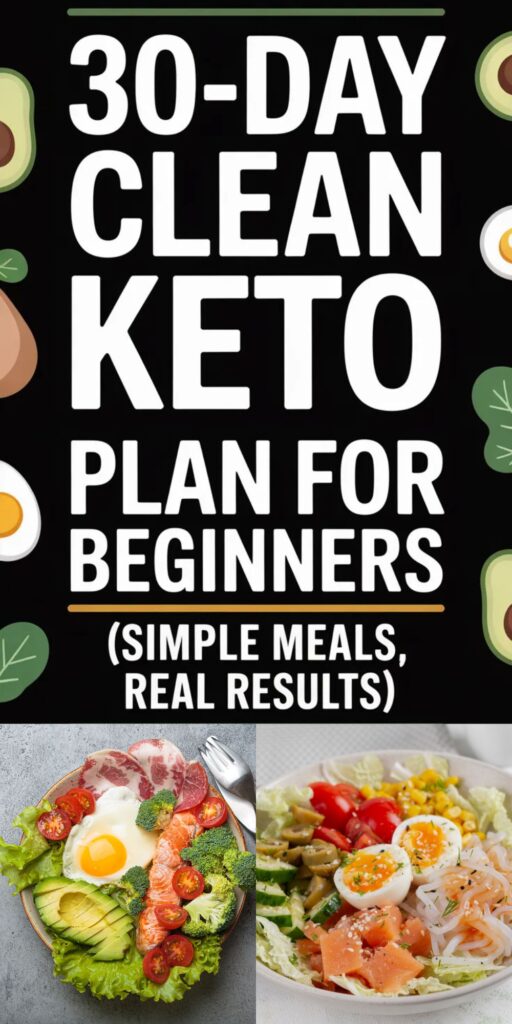
30-Day Clean Diet Keto Plan for Beginners: Simple Meals, Real Results
If you’ve heard about keto but have no idea where to start — this is for you.
No complicated formulas. No expensive specialty ingredients. No hours in the kitchen. Just a clear, beginner-friendly 30-day plan that walks you through exactly what to eat, how to cook it, and why it works — one day at a time.
By the end of this month, you’ll have lost your first real layer of body fat, kicked the sugar cravings, and — most importantly — built a way of eating you can actually stick to.
Let’s start from the very beginning.
👉 Download This 30-Day Keto Plan Everyone Is Saving Right Now
What Is the Ketogenic Diet? (The Simple Version)
Your body can run on two fuel sources: sugar (from carbohydrates) or fat. Most people run on sugar because that’s what the standard diet provides. The problem is that sugar burns fast, spikes your blood sugar, and leaves you hungry and crashing a few hours later.
When you dramatically reduce carbohydrates, your body is forced to switch fuel sources. It starts breaking down fat — both dietary fat and stored body fat — into molecules called ketones, which your liver uses for energy. This metabolic state is called ketosis.
Once you’re in ketosis:
- Your energy becomes steady and consistent (no more 3 p.m. crashes)
- Your hunger hormones calm down (you naturally eat less)
- Your body burns stored fat around the clock
- Your mental clarity sharpens noticeably
Clean keto takes this one step further by emphasizing real, whole foods — quality proteins, healthy fats, and fresh vegetables — instead of processed “keto” products that are technically low-carb but nutritionally empty.
The Rules of Clean Keto (Only 3 Things to Remember)
Rule 1: Keep carbs under 20–30g of net carbs per day. Net carbs = total carbs minus fiber. Fiber doesn’t spike blood sugar, so it doesn’t count.
Rule 2: Eat real, whole foods. If it comes in a bag with a long ingredient list, put it back. Your plate should look like it came from a farm, not a factory.
Rule 3: Eat until you’re satisfied, not stuffed. You don’t need to count calories on this plan. Fat and protein are deeply satisfying — listen to your body.
That’s it. Everything else in this plan is just an application of those three rules.
What to Eat vs. What to Avoid
Eat freely:
- Proteins: Eggs, beef, chicken, pork, lamb, turkey, bacon, salmon, tuna, sardines, shrimp, organ meats
- Healthy fats: Butter, ghee, olive oil, coconut oil, avocado oil, avocados, full-fat cheese, full-fat cream
- Low-carb vegetables: Spinach, kale, broccoli, cauliflower, zucchini, asparagus, cucumber, celery, bell peppers, mushrooms, cabbage, lettuce
- Nuts and seeds (in moderation): Macadamia nuts, pecans, walnuts, almonds, pumpkin seeds, chia seeds
- Dairy: Heavy cream, full-fat Greek yogurt (plain, unsweetened), full-fat cottage cheese, hard cheeses
Avoid completely:
- All bread, pasta, rice, oats, cereals, crackers
- Sugar in any form (including honey, maple syrup, agave)
- All fruit juice and most fruit (berries in small amounts are fine)
- Starchy vegetables (potatoes, sweet potatoes, corn, peas)
- Beans and legumes
- All sodas, sports drinks, and sweetened beverages
- Processed “low-fat” products (they replace fat with sugar)
- Most packaged snack foods
Drink:
- Water (your main drink — aim for 2–3 liters per day)
- Black coffee or with heavy cream (no sugar)
- Unsweetened tea
- Sparkling water (plain or naturally flavored)
Before You Start: Your Beginner Checklist
Work through this list in the 2–3 days before you begin Day 1.
Step 1: Clear your kitchen. Remove the obvious carb landmines: bread, pasta, rice, cereal, chips, cookies, juice, and anything with sugar in the first three ingredients. You don’t need to throw it all away — donate it or give it to someone. But if it’s in your house, you’ll eat it in a weak moment.
Step 2: Do your first keto grocery shop. Use the shopping list in the next section. Buy enough for at least the first week.
Step 3: Prep one or two things in advance. Hard-boil 6 eggs. Cook a batch of bacon. These two things will save you on your first few mornings when the habit isn’t formed yet.
Step 4: Set up your electrolytes. In the first week, your body flushes a lot of water and sodium as it drops carbs. This causes the “keto flu” — headaches, fatigue, brain fog. It’s not your body rejecting keto; it’s just dehydration and low sodium. Fix it by: adding salt to your food generously, drinking plenty of water, and having a pinch of salt in water if you feel a headache coming on.
Step 5: Set a realistic expectation. Days 1–3 are the hardest. You may feel tired or foggy as your body transitions. This is temporary. Most people feel noticeably better by Day 5, and genuinely great by Day 10. Push through the first week.
Your Beginner Keto Grocery List
Print this out or save it to your phone. This list covers approximately Week 1 and gives you pantry staples that carry through the whole 30 days.
Proteins
- Eggs (2 dozen)
- Bacon (1–2 packs)
- Ground beef (2 lbs, 80/20 fat ratio)
- Chicken thighs, bone-in skin-on (2 lbs)
- Salmon fillets (2–3 fillets)
- Tuna (3–4 cans in water or olive oil)
- Rotisserie chicken (1, for quick meals)
Produce
- Baby spinach (large bag)
- Broccoli (2 heads or 1 large bag frozen)
- Zucchini (3–4 medium)
- Avocados (5–6)
- Asparagus (1 bunch)
- Mushrooms (1 pack)
- Celery
- Cucumber (2)
- Romaine lettuce hearts
- Bell peppers (2–3)
- Lemon (3–4, for dressing and cooking)
Fats and oils
- Butter (grass-fed if possible, 1 block)
- Extra virgin olive oil
- Coconut oil (small jar)
- Full-fat mayonnaise (check label — no sugar or canola oil)
Dairy
- Heavy whipping cream
- Full-fat Greek yogurt, plain (Fage or Chobani plain)
- Hard cheeses: cheddar, parmesan, feta, or your preference
- Cream cheese
- Sour cream
- Full-fat cottage cheese
Pantry
- Salt (sea salt or pink Himalayan)
- Black pepper
- Garlic powder, onion powder, paprika, Italian seasoning
- Dijon mustard
- Apple cider vinegar
- Chicken broth (low sodium, for soups and cooking)
- Pork rinds (for snacking)
- Dark chocolate, 85%+ cocoa (Lindt 85% is widely available)
- Almond flour (small bag, for occasional baked recipes)
- Almonds, pecans, macadamia nuts (small bags)
A Note on Meal Structure
On this plan, you eat three meals per day with one optional snack. You don’t need to snack if you’re not hungry — this is common as you adapt and your hunger hormones stabilize.
Each daily recipe is written to serve one person. If you’re cooking for a family, multiply accordingly.
Meal prep tip: On Sundays, hard-boil 6 eggs, cook a full pack of bacon, and roast a sheet pan of broccoli or cauliflower. These three things will speed up your weekday mornings and lunches dramatically.
👉 Download This 30-Day Keto Plan Everyone Is Saving Right Now
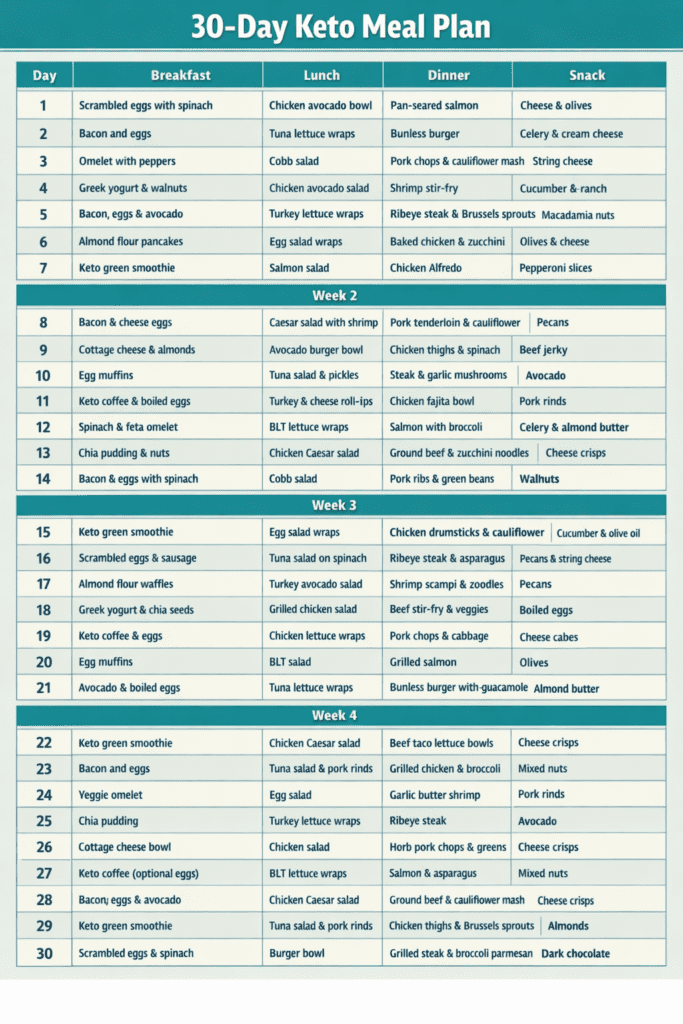
30-Day Clean Keto Plan With Recipes
Week 1: Adaptation Phase
Focus on basics to enter ketosis. Meals emphasize fats and proteins.
Day 1
Breakfast: Scrambled eggs with spinach
Lunch: Chicken avocado bowl
Dinner: Pan-seared salmon with asparagus
Snack: Cheese and olives
Day 2
Breakfast: Bacon and eggs
Lunch: Tuna lettuce wraps
Dinner: Bunless burger with mushrooms and cheese
Snack: Celery with cream cheese
Day 3
Breakfast: Omelet with peppers and cheese
Lunch: Cobb salad
Dinner: Pork chops with cauliflower mash and green beans
Snack: String cheese
Day 4
Breakfast: Greek yogurt with chia seeds and walnuts
Lunch: Chicken salad with avocado
Dinner: Shrimp stir-fry with broccoli
Snack: Cucumber with ranch
Day 5
Breakfast: Bacon, eggs, and avocado
Lunch: Turkey and cheese lettuce wraps
Dinner: Ribeye steak with roasted Brussels sprouts
Snack: Macadamia nuts
Day 6
Breakfast: Almond flour pancakes
Lunch: Egg salad lettuce wraps
Dinner: Baked chicken thighs with zucchini
Snack: Olives and cheese
Day 7
Breakfast: Keto green smoothie
Lunch: Salmon salad
Dinner: Chicken Alfredo with zucchini noodles
Snack: Pepperoni slices
Week 2: Build Momentum
Add variety to stabilize the energy.
Day 8
Breakfast: Fried eggs with bacon and cheese
Lunch: Caesar salad with shrimp
Dinner: Pork tenderloin with roasted cauliflower
Snack: Pecans
Day 9
Breakfast: Cottage cheese with cinnamon and almonds
Lunch: Avocado burger bowl
Dinner: Chicken thighs with sautéed spinach
Snack: Beef jerky
Day 10
Breakfast: Egg muffins
Lunch: Tuna salad with pickles
Dinner: Steak with garlic mushrooms
Snack: Avocado
Day 11
Breakfast: Keto coffee with boiled eggs
Lunch: Turkey and cheese roll-ups
Dinner: Chicken fajita bowl
Snack: Pork rinds
Day 12
Breakfast: Spinach and feta omelet
Lunch: BLT lettuce wraps
Dinner: Salmon with broccoli and lemon butter
Snack: Celery with almond butter
Day 13
Breakfast: Chia pudding with nuts
Lunch: Chicken Caesar salad
Dinner: Ground beef with zucchini noodles
Snack: Cheese crisps
Day 14
Breakfast: Bacon and eggs with spinach
Lunch: Cobb salad
Dinner: Pork ribs with green beans
Snack: Walnuts
Week 3: Variety Week
Experiment with flavors. Cravings should fade
Day 15
Breakfast: Keto green smoothie
Lunch: Egg salad lettuce wraps
Dinner: Chicken drumsticks with roasted cauliflower
Snack: Cucumber with olive oil
Day 16
Breakfast: Scrambled eggs with sausage
Lunch: Tuna salad over spinach
Dinner: Ribeye steak with asparagus
Snack: Pecans and string cheese
Day 17
Breakfast: Almond flour waffles
Lunch: Turkey avocado salad
Dinner: Shrimp scampi with zucchini noodles
Snack: Pecans
Day 18
Breakfast: Greek yogurt with chia seeds
Lunch: Grilled chicken salad
Dinner: Beef stir-fry with vegetables
Snack: Boiled eggs
Day 19
Breakfast: Keto coffee with eggs
Lunch: Chicken lettuce wraps
Dinner: Pork chops with sautéed cabbage
Snack: Cheese cubes
Day 20
Breakfast: Egg muffins
Lunch: BLT salad
Dinner: Grilled salmon
Snack: Olives
Day 21
Breakfast: Avocado with boiled eggs
Lunch: Tuna lettuce wraps
Dinner: Bunless burger with guacamole
Snack: Almond butter
Week 4: Maintenance
Lock in habits for real results like better focus and fat loss.
Day 22
Breakfast: Keto green smoothie
Lunch: Chicken Caesar salad
Dinner: Beef taco lettuce bowls
Snack: Cheese crisps
Day 23
Breakfast: Bacon and eggs
Lunch: Tuna salad with pork rinds
Dinner: Grilled chicken with broccoli and parmesan
Snack: Mixed nuts
Day 24
Breakfast: Veggie omelet
Lunch: Egg salad
Dinner: Garlic butter shrimp with zucchini noodles
Snack: Pork rinds
Day 25
Breakfast: Chia pudding
Lunch: Turkey lettuce wraps
Dinner: Ribeye steak
Snack: Avocado
Day 26
Breakfast: Cottage cheese bowl
Lunch: Chicken salad
Dinner: Herb pork chops with sautéed greens
Snack: Celery with cream cheese
Day 27
Breakfast: Keto coffee (optional eggs)
Lunch: BLT lettuce wraps
Dinner: Salmon with asparagus
Snack: Mixed nuts
Day 28
Breakfast: Bacon, eggs, and avocado
Lunch: Chicken Caesar salad
Dinner: Ground beef with cauliflower mash
Snack: Cheese crisps
Day 29
Breakfast: Keto green smoothie
Lunch: Tuna salad with pork rinds
Dinner: Chicken thighs with Brussels sprouts
Snack: Almonds
Day 30
Breakfast: Scrambled eggs with spinach
Lunch: Burger bowl
Dinner: Grilled steak with broccoli parmesan
Snack: Dark chocolate
Common side effects during the First week of Keto
During the first week of starting keto, many people experience what’s called the “keto flu” — a group of temporary side effects that happen as your body adapts to using fat instead of carbs for fuel. These usually last 3–7 days.
Here are the most common side effects and why they happen:
- Headache and fatigue – As your body loses stored carbs (and water), energy levels drop temporarily.
- Brain fog and irritability – The brain is adjusting to ketones as its new energy source.
- Muscle cramps – Lower insulin levels cause your body to excrete more minerals like magnesium and potassium.
- Constipation – Reduced fiber from lower-carb foods can slow digestion if you don’t eat enough leafy greens or drink water.
- Dizziness or lightheadedness – Often linked to dehydration and electrolyte imbalances.
- Nausea or upset stomach – High fat intake can take time for your body to digest efficiently.
- Insomnia – Temporary restlessness can happen as hormones adjust.
How to Ease Symptoms
- Drink plenty of water — aim for at least 2–3 liters daily.
- Add electrolytes — sodium, magnesium, and potassium help relieve cramps and fatigue.
- Eat enough healthy fats and moderate protein.
- Don’t slash carbs too suddenly—gradually reduce over a few days.
- Get rest and avoid intense exercise during the first week.
Most people feel much better by week two, noticing improved focus, energy, and fewer cravings once their body is fully in ketosis.
How to track net carbs accurately on clean keto
Tracking net carbs accurately is key to staying in ketosis on clean keto. Net carbs = total carbs minus fiber (and most sugar alcohols). Here’s how to do it right.
The Formula
For every food or meal:
Net Carbs = Total Carbs – Fiber – (Sugar Alcohols like erythritol)
Example: Avocado (100g) – 9g total carbs, 7g fiber = 2g net carbs.
Step-by-Step Tracking
1. Read labels carefully.
Check the nutrition facts. Total carbs are at the top. Subtract dietary fiber listed below. Ignore sugar alcohols like erythritol (they don’t spike blood sugar much).
2. Weigh your food.
Use a kitchen scale for raw ingredients—eyeballing leads to mistakes. Apps need grams for precision.
3. Use a keto-friendly app.
- Cronometer auto-calculates net carbs. Set to “Net Carbs – No Sugar Alcohol.”
- Carb Manager or MyFitnessPal (keto mode) work too. Log everything, even oils/spices.
Search the database or scan barcodes for packaged items.
4. Handle whole foods.
Look up values in apps or charts:
- Broccoli (1 cup): 6g total – 3g fiber = 3g net
- Chicken thigh: 0g net (pure protein/fat)
Daily Routine
- Log before eating. Aim 20-50g net carbs.
- Track macros too: 70% fat, 25% protein, 5% carbs.
- Prep meals ahead—batch log recipes.
- Test ketones weekly (strips/breath) to verify.
Common Mistakes to Avoid
- Forgetting hidden carbs in sauces/dressings.
- Overdoing nuts (easy to overshoot).
- Not subtracting fiber from veggies.
Stick to real foods like meats, eggs, avocados, and greens—fewer surprises. After a week, it becomes habit.
Electrolytes Needed to Avoid Keto Flu while in Ketosis
Keto flu hits hard without enough electrolytes. On clean keto, low carbs make your kidneys dump sodium, potassium, and magnesium fast—leading to cramps, headaches, and fatigue.
Key Electrolytes & Daily Targets
- Sodium: 3,000-5,000mg. Salt food heavily, sip bone broth, or add pink Himalayan salt to water.
- Potassium: 3,000-4,700mg. Eat avocados, spinach, salmon, mushrooms.
- Magnesium: 300-500mg. Grab nuts, seeds, dark chocolate (85%+), or supplement 200-400mg glycinate form.
Quick Fixes
Drink 3-4 liters water daily with electrolytes mixed in. Try a simple mix: 1/2 tsp salt, 1/4 tsp “No Salt” (potassium), splash lemon in water. Eat salty snacks like pickles or olives. Symptoms fade in 2-5 days with consistency.
Recipes for homemade keto electrolyte drinks
Homemade keto electrolyte drinks are cheap, simple, and perfect for beating keto flu. Use clean ingredients like salt, “lite salt,” magnesium powder, and lemon juice—no sugar. Drink 1-2 liters daily.
Basic Keto Electrolyte Drink (Makes 1 liter)
Ingredients:
- 1 liter water (or sparkling)
- 1/2 tsp sea salt or pink Himalayan salt (sodium)
- 1/4 tsp “No Salt” or potassium chloride (potassium)
- 1/4 tsp magnesium glycinate powder
- Juice of 1/2 lemon or lime
- Stevia or monk fruit to taste (optional)
Instructions: Stir until dissolved. Chill with ice. Sip throughout the day.
Lemon-Lime Version (32 oz)
Ingredients:
- 3 cups water
- 2 tbsp fresh lemon juice
- 1 tbsp lime juice
- 1/8 tsp sea salt
- 1/4 tsp magnesium powder
- 2 tbsp allulose (optional)
Instructions: Shake in a bottle. Add ice.
Tropical Twist (1 liter)
Ingredients:
- 5 cups water
- 1/2 cup lemon juice
- 1/2 tsp potassium chloride
- 1/4 tsp sea salt
- 2 tbsp magnesium powder (like Natural Calm)
Instructions: Mix, fizz will settle. Refrigerate up to 4 days.
These deliver 1,000-2,000mg sodium, 500-1,000mg potassium, 100-300mg magnesium per liter—adjust to taste. Start slow to avoid tummy upset.