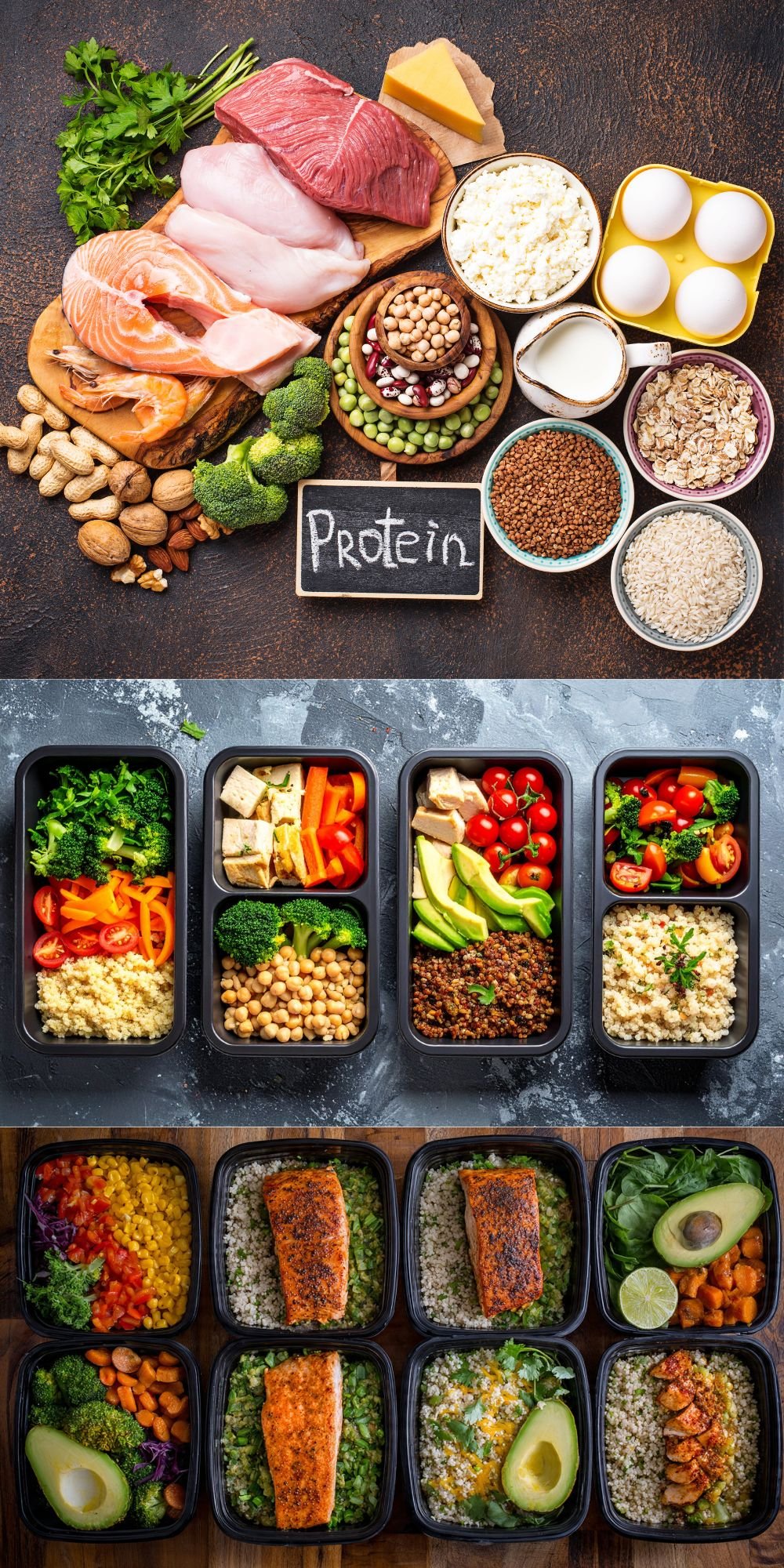
THE COMPLETE 100 GRAM PROTEIN MEAL PLAN FOR A DAY (BEGINNER-FRIENDLY)
Trying to hit 100 grams of protein a day but have no idea where to start? This 7-day meal plan lays it all out — no supplements required, no complicated recipes, just real food that actually works.
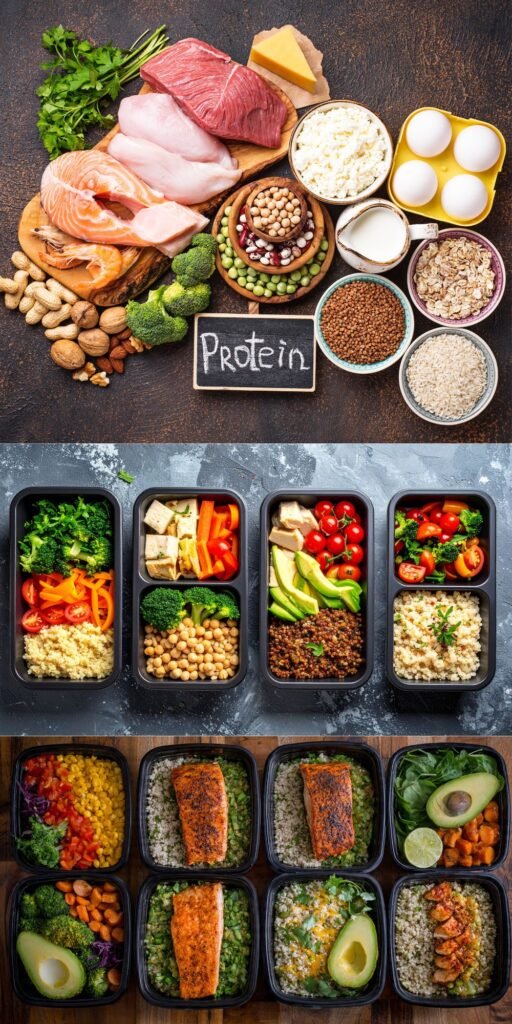
I’ll be honest with you: when I first started tracking protein, I thought 100 grams sounded like a lot. It’s not as hard as it sounds once you know which foods to lean on.
The real problem for most beginners isn’t effort — it’s not knowing what to eat at each meal so the numbers actually add up by dinnertime.
This plan is built for someone who is new to high-protein eating.
The meals are straightforward, the ingredients are easy to find, and every single day lands right around 100 grams without turning your kitchen into a meal-prep factory. I’ve also included a quick-reference protein food table and some tips at the bottom so you can swap things out as needed.
WHY 100 GRAMS OF PROTEIN?
Most nutrition guidelines recommend somewhere between 0.7 to 1 gram of protein per pound of body weight for people who are active or trying to build or maintain muscle. For the average adult, 100 grams lands in a solid, realistic range that supports muscle retention, keeps you fuller longer, and helps manage cravings without going overboard.
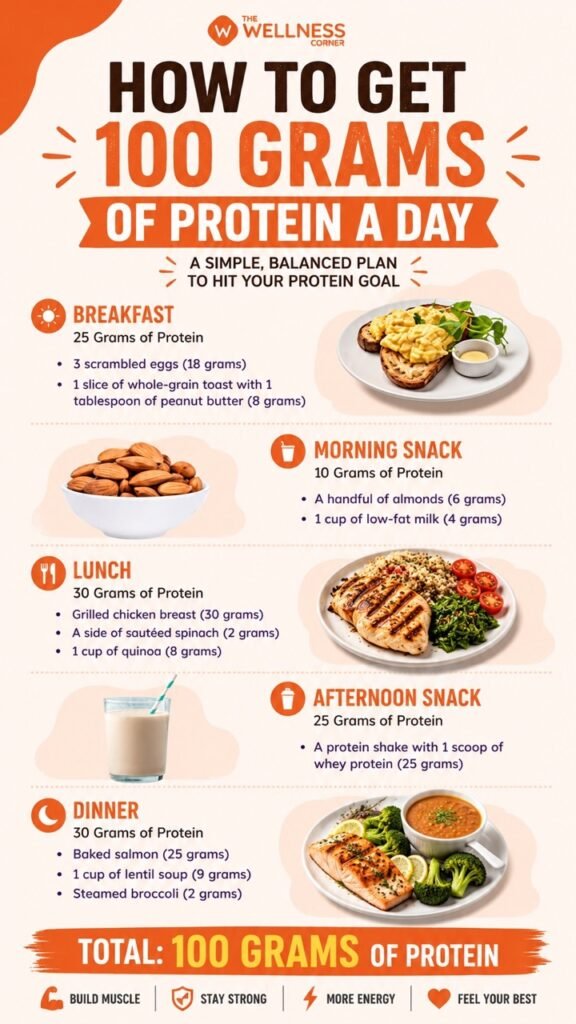
It’s also a number that’s easy to track mentally once you get the hang of it. You’re aiming for roughly 25–35 grams per main meal with a protein-forward snack or two to fill the gaps.
💡 Quick note: If you’re significantly above or below average body weight, or have specific health goals, it’s worth checking with a dietitian to dial in your personal protein target. 100 grams is a great general starting point, not a one-size-fits-all rule.
HIGH-PROTEIN FOODS AT A GLANCE
Before we get to the meal plan, here’s a reference table of the most common high-protein foods and roughly how much protein they give you.
This will make swapping ingredients a lot easier.
| Food | Serving Size | Protein (approx.) |
|---|---|---|
| Chicken breast (cooked) | 4 oz / 113g | 35g |
| Ground turkey (cooked) | 4 oz / 113g | 28g |
| Salmon fillet (cooked) | 5 oz / 140g | 30g |
| Canned tuna (in water) | 3 oz / 85g | 20g |
| Shrimp (cooked) | 4 oz / 113g | 24g |
| Eggs (large) | 1 egg | 6g |
| Egg whites | 3 whites | 11g |
| Greek yogurt (plain, 0%) | 1 cup / 227g | 17–20g |
| Cottage cheese (low-fat) | ½ cup / 113g | 13–14g |
| Edamame (shelled) | ½ cup / 75g | 9g |
| Lentils (cooked) | 1 cup / 200g | 18g |
| Black beans (cooked) | 1 cup / 172g | 15g |
| Tofu (firm) | ½ cup / 126g | 10g |
| Protein powder (whey or plant) | 1 scoop | 20–25g |
These numbers are averages and can vary by brand or preparation.
Always check your actual nutrition label if you’re tracking precisely.
THE 7-DAY 100 GRAM PROTEIN MEAL PLAN
Here’s a full week of meals laid out in a table so you can see the whole picture at once. Each day is followed by a more detailed breakdown with portion notes.
| Day | Breakfast (~25–35g) | Lunch (~30–35g) | Snack (~10–15g) | Dinner (~25–30g) | Daily Total |
|---|---|---|---|---|---|
| Monday | 3 scrambled eggs + 1 cup Greek yogurt | Grilled chicken rice bowl | ½ cup cottage cheese | Ground turkey taco bowl | ~105g |
| Tuesday | Protein smoothie (1 scoop) | Tuna salad wrap + 2 hard-boiled eggs | ½ cup edamame | Baked salmon + roasted broccoli | ~99g |
| Wednesday | 2 eggs + ½ cup cottage cheese | Turkey and cheese wrap | 1 cup Greek yogurt | Chicken breast stir-fry | ~104g |
| Thursday | Protein oats (oats + 1 scoop protein powder) | Lentil soup (1.5 cups) | 2 hard-boiled eggs | Shrimp rice bowl | ~101g |
| Friday | 3-egg omelette + turkey sausage | Ground beef and veggie bowl | Protein shake (1 scoop) | Baked cod + sweet potato | ~109g |
| Saturday | Cottage cheese pancakes | Chicken Caesar salad | Greek yogurt + handful almonds | Sirloin steak + roasted veggies | ~110g |
| Sunday | Egg white scramble + protein smoothie | Chickpea and chicken salad | ½ cup edamame | Turkey meatballs + zucchini noodles | ~107g |
DAY-BY-DAY BREAKDOWN
Monday — ~105g Protein
Breakfast: 3 scrambled eggs + 1 cup plain Greek yogurt with a drizzle of honey. The eggs give you 18g right away and the yogurt adds another 17–18g. That’s a strong start before you’ve even left the house.
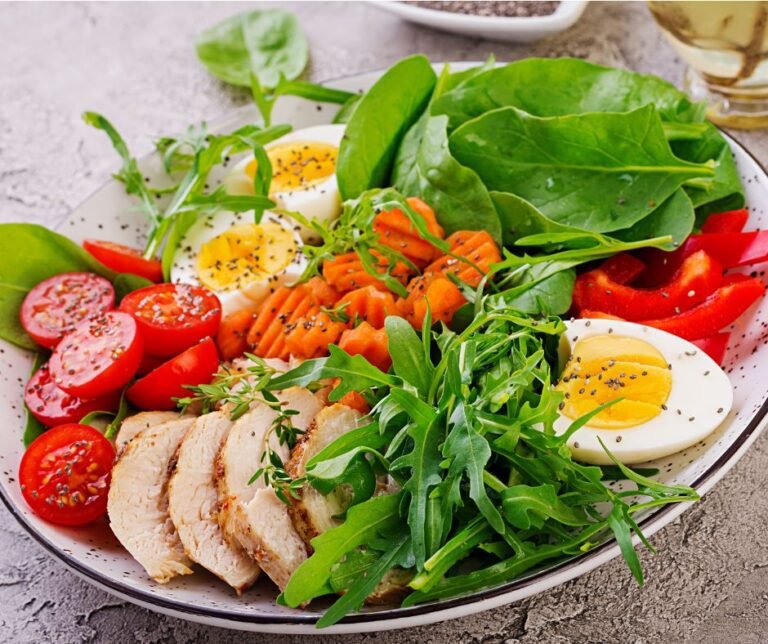
Lunch: Grilled chicken rice bowl. Use 4 oz of cooked chicken breast (about 35g protein), white or brown rice, any vegetables you like, and a simple sauce. This is the kind of lunch that holds you through the afternoon without a crash.
Snack: ½ cup cottage cheese plain or with some fruit. Easy 13–14g with almost no prep.
Dinner: Ground turkey taco bowl with black beans, salsa, shredded lettuce, and a little cheese over rice. 4 oz of ground turkey gets you around 28g and the black beans add a few more. Filling and easy to prep in under 20 minutes.
Tuesday — ~99g Protein
Breakfast: A protein smoothie with 1 scoop of protein powder (20–25g), 1 banana, 1 cup of milk or a milk alternative, and ice. Takes three minutes. Good for days when you’re running behind.
Lunch: Tuna salad wrap made with 3 oz canned tuna (20g) mixed with a little mayo and celery, in a whole wheat tortilla. Add 2 hard-boiled eggs on the side (12g) and that lunch hits around 32g total.
Snack: ½ cup shelled edamame, lightly salted. 9g of protein and it actually tastes good as a snack, which not a lot of protein snacks can claim.
Dinner: Baked salmon (5 oz) with roasted broccoli and a side of quinoa. The salmon alone gives you around 30g. This one does take a little more time than the rest of the week (maybe 30 minutes total), but it’s worth having once.
💡 Tip: Buy a large piece of salmon and portion it out — salmon reheats well the next day in a bowl with rice and avocado.
Wednesday — ~104g Protein
Breakfast: 2 eggs scrambled with ½ cup cottage cheese stirred in. It sounds weird if you haven’t tried it, but the cottage cheese makes the eggs fluffier and adds 13–14g of protein on top of the 12g from the eggs. Total around 26g from a 10-minute breakfast.
Lunch: Turkey and cheese wrap with 4 oz of sliced turkey breast (about 28g), one slice of cheese, lettuce, tomato, and mustard in a whole wheat wrap. Straightforward, no cooking needed.
Snack: 1 cup plain Greek yogurt. You can add granola or a little fruit to make it feel more like a snack and less like a diet food.
Dinner: Chicken breast stir-fry with 4 oz chicken, mixed vegetables, and a simple soy-ginger sauce over rice. Quick, easy, and around 35g of protein in the chicken alone.
Thursday — ~101g Protein
Breakfast: Protein oats — cook your oats as normal, then stir in 1 scoop of protein powder once they’re off the heat (stirring it in off-heat prevents clumping). Add nut butter or banana. Around 25g of protein and it keeps you full for hours.
Lunch: Lentil soup. Either homemade or store-bought — 1.5 cups gives you around 27g of protein from lentils alone, plus it’s high in fiber. This is the one day the plan goes plant-based for lunch, and honestly, you won’t miss the meat.
Snack: 2 hard-boiled eggs. Prep a batch at the start of the week and they keep in the fridge for up to a week (12g protein, zero cooking effort on the day).
Dinner: Shrimp rice bowl with 4 oz shrimp (around 24g), white rice, sliced avocado, and a squeeze of lime. Light but protein-rich. The shrimp cook in under 5 minutes if you’re using pre-cleaned, frozen shrimp.
Friday — ~109g Protein
Breakfast: A 3-egg omelette with 2 oz of turkey sausage crumbled in. Add some spinach or peppers if you have them. This breakfast is more of a weekend-style one (takes about 15 minutes), but it’s a good way to start the last weekday feeling full and energized.
Lunch: Ground beef and veggie bowl with 4 oz lean ground beef (around 28g), roasted zucchini and peppers, and rice. Season it simply with garlic, cumin, and salt.
Snack: Protein shake with 1 scoop protein powder in water or milk. Sometimes simple is fine. You don’t need to make every snack interesting.
Dinner: Baked cod fillet (5 oz, around 26g) with a baked sweet potato and a side salad. Light, balanced, and easy to put together.
Saturday — ~110g Protein
Breakfast: Cottage cheese pancakes made by blending ½ cup cottage cheese, 2 eggs, ¼ cup oats, and a pinch of cinnamon (no flour needed). They’re thin but cook quickly and taste genuinely good. Around 26g of protein and they feel like a treat.
Lunch: Chicken Caesar salad with 4 oz grilled chicken, romaine, a light Caesar dressing, and parmesan. Simple, satisfying, and around 35g of protein from the chicken alone.
Snack: 1 cup Greek yogurt with a handful of almonds. Around 22–23g combined. The almonds add healthy fat and a little extra protein (about 6g per small handful).
Dinner: Sirloin steak (5 oz, around 30g protein) with roasted vegetables and a side of mashed potatoes or rice. Saturday dinner should feel a little more like a meal and less like a protein delivery system. This one does both.
Sunday — ~107g Protein
Breakfast: Egg white scramble (3–4 whites, around 11g) paired with a small protein smoothie on the side. Light breakfast for a lighter Sunday morning.
Lunch: Chickpea and chicken salad with ½ cup chickpeas (about 7–8g), 3 oz chicken breast (around 26g), cucumber, tomato, feta, and olive oil. Around 35–36g combined. Good for meal prepping and eating cold.
Snack: ½ cup shelled edamame. Same as Tuesday — reliable, easy, and genuinely tasty.
Dinner: Turkey meatballs (use ground turkey, egg, breadcrumbs, and Italian seasoning) over zucchini noodles with marinara. Around 28–30g of protein from the meatballs. A good way to close the week with something that feels homemade.
TIPS FOR HITTING 100 GRAMS OF PROTEIN AS A BEGINNER
1. Front-load your protein.
Most people fail to hit 100g because they eat a low-protein breakfast and then scramble to catch up by dinner. If you get 30–35g at breakfast, the rest of the day becomes much more manageable.
2. Keep a protein anchor in every meal.
Every single meal should have one main protein source. Chicken, eggs, fish, Greek yogurt, cottage cheese, legumes — pick one and build the meal around it. If your meal doesn’t have a clear protein anchor, it’s probably low-protein.
3. Batch cook your proteins.
On Sunday, cook a big batch of chicken breast, hard-boil a dozen eggs, and prep one or two other proteins. This removes the “I don’t know what to make” barrier on weekday afternoons. The days when I haven’t prepped ahead are the days I fall short of 100g (every single time).
4. Use Greek yogurt and cottage cheese as easy wins.
These two foods are underrated for protein. They require zero cooking, they’re cheap, and they’re easy to pair with other foods. A cup of Greek yogurt at breakfast and a half cup of cottage cheese as an afternoon snack can add 30–35g of protein with almost no effort.
5. Don’t rely on protein shakes to carry your day.
Shakes are useful as a supplement, not a crutch. If you’re hitting your target primarily through shakes and struggling to get there through food, it’s worth looking at why. Usually it comes down to not having enough protein-rich food in the house.
⚠️ Heads up: If you’re not used to eating this much protein, your digestion may need a few days to adjust. That’s normal. Increase your water intake and add fiber-rich vegetables to every meal — it helps.
WEEKLY PROTEIN SUMMARY
| Day | Estimated Daily Protein |
|---|---|
| Monday | ~105g |
| Tuesday | ~99g |
| Wednesday | ~104g |
| Thursday | ~101g |
| Friday | ~109g |
| Saturday | ~110g |
| Sunday | ~107g |
| Weekly Average | ~105g/day |
These estimates are based on standard serving sizes and average nutritional values. Your actual numbers will vary depending on exact portions and brands used.
If you’re tracking closely, a free app like MyFitnessPal or Cronometer makes it easy to log as you go — especially in the first couple of weeks while you’re building awareness.
FREQUENTLY ASKED QUESTIONS
Can I hit 100g of protein without eating meat?
Yes. Plant-based sources like lentils, chickpeas, tofu, edamame, Greek yogurt, cottage cheese, and protein powder can get you there. It takes a little more planning but it’s absolutely doable.
Do I need to eat 4 meals a day?
Not necessarily. This plan uses 3 meals and 1 snack as a structure, but if you prefer 2 larger meals or 5 smaller ones, what matters is the total daily protein — not how it’s distributed.
Will eating this much protein make me bulky?
No. Protein alone doesn’t cause muscle growth — progressive resistance training does. High protein intake supports whatever your body is doing, whether that’s building muscle, losing fat, or simply staying healthy.
What if I miss a day?
Move on. One low-protein day doesn’t undo anything. The goal is consistency over a week, not perfection on any single day.
RECIPES TO TRY THIS WEEK
The meals in this plan don’t have to be guesswork. These recipes from FlavorfulPinch map directly to what you’re already eating this week — high-protein, straightforward to make, and actually good enough to repeat.
1. 15 High Protein Smoothies
Tuesday and Sunday mornings call for a fast, no-fuss breakfast — and a protein smoothie is exactly that. Most take under five minutes and work just as well post-workout as they do on a rushed weekday morning.
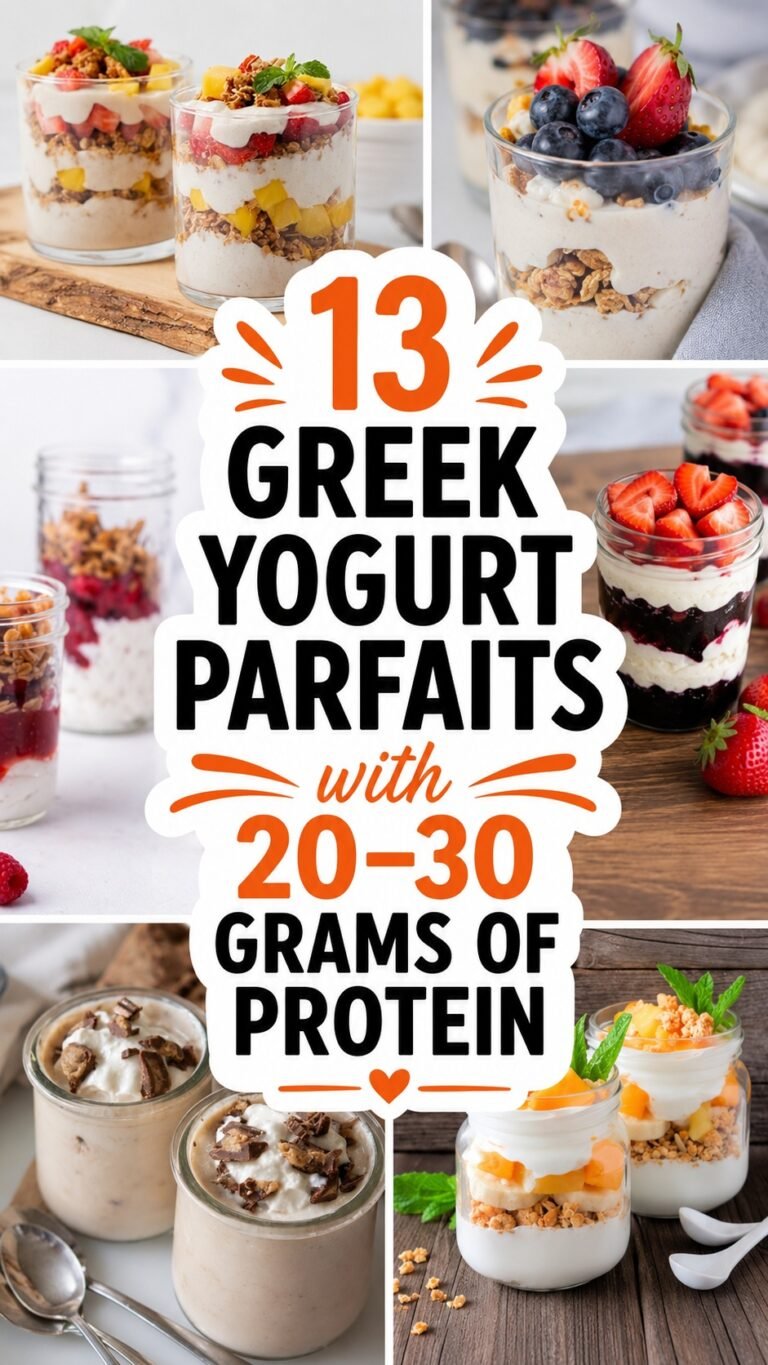
2. 15 High-Protein Greek Yogurt Bowls
Greek yogurt is one of the easiest wins in this entire plan — it shows up at breakfast on Monday, as a snack on Wednesday and Saturday, and anywhere you need a quick 17–20g protein boost.
→ Get the full recipe: 15 High-Protein Greek Yogurt Bowls
3. 10 Easy Canned Salmon Recipes
Salmon is one of the highest-protein dinners in this plan (30g from a 5 oz fillet), but fresh salmon isn’t always on hand. Canned salmon solves that — it’s already cooked, cheaper, and surprisingly versatile.
→ Get the full recipe: 10 Easy Canned Salmon Recipes
4. Chickpea Feta Avocado Salad
Sunday’s lunch in this plan is a chickpea and chicken salad — and this recipe is essentially a better version of it. Chickpeas, feta, and avocado with a sharp lemon dressing, ready in minutes with no cooking needed.
→ Get the full recipe: Chickpea Feta Avocado Salad
5. Overnight Oats Breakfast Meal Prep: 16 No-Cook Jars
Adding Greek yogurt, cottage cheese, or protein powder to any of these jars gets you to 25g+ protein before you’ve left the house. Great for anyone who’s always running short on time in the morning.
→ Get the full recipe: Overnight Oats Breakfast Meal Prep: 16 No-Cook Jars
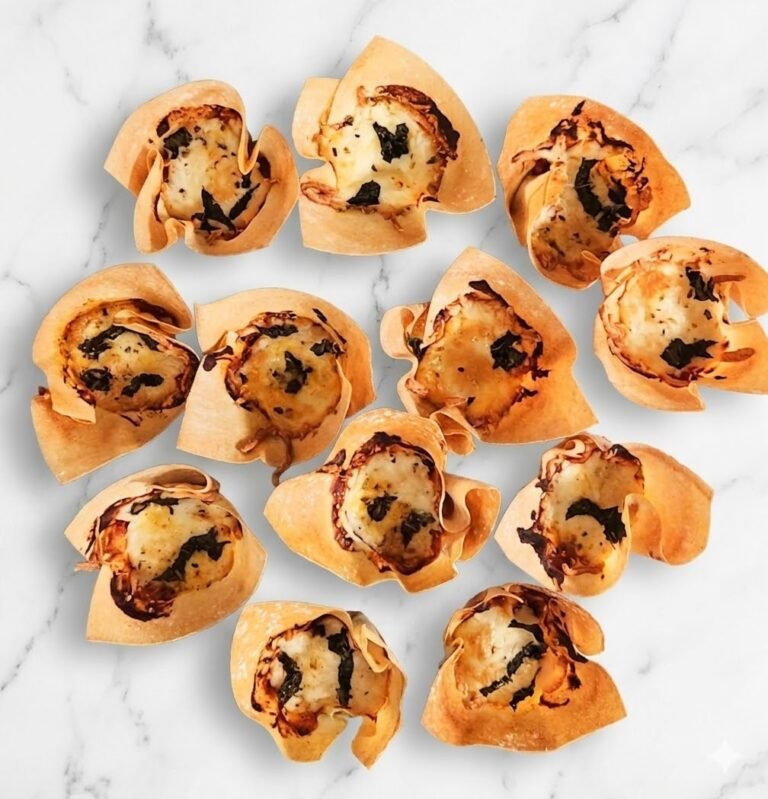
6. Cottage Cheese Muffin Recipes
Make a batch on Sunday and you’ll have high-protein snacks ready for the entire week, which takes the pressure off hitting your daily number through meals alone.