90-Day Cholesterol-Lowering Meal Plan for Beginners: The Complete Guide
High cholesterol is one of the most common things doctors flag — and it’s also one of the most responsive to what you eat.
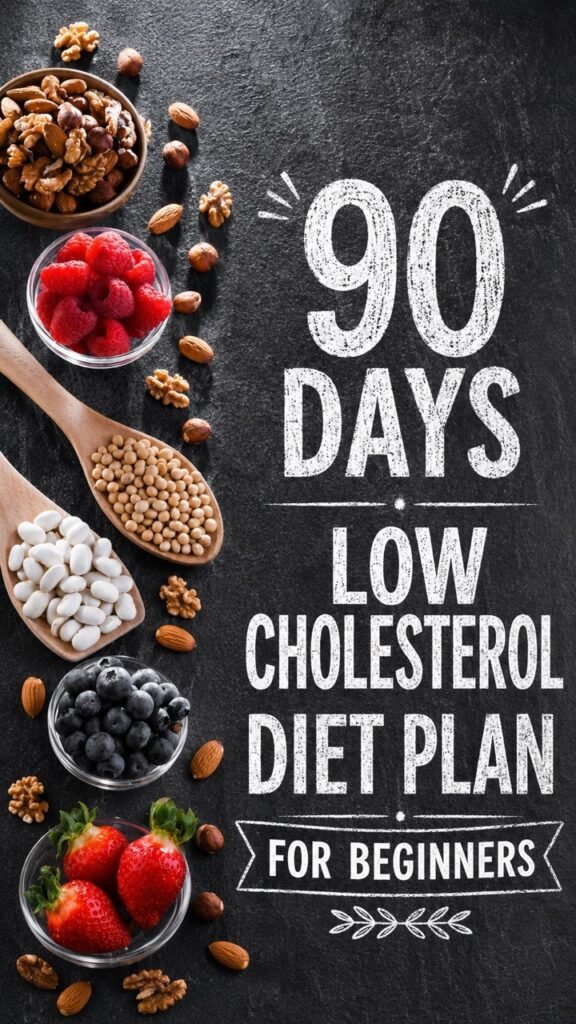
You don’t need to go vegan, give up everything you love, or live on boiled vegetables. What you need is a clear, realistic plan that actually explains what’s going on in your body, what to eat, and what to avoid, without making it feel like a punishment.
Over the next 90 days, you’re going to change the way you eat in a gradual, sustainable way. Not a crash diet. Not a 30-day cleanse you abandon by week two.
A real shift that your body has time to respond to — because that’s how long it takes to see meaningful change in your numbers.
Most people following a proper cholesterol-lowering eating plan see their LDL drop by 10–20%, sometimes more. Some avoid medication altogether.
Let’s start from the very beginning.
What Is Cholesterol and Why Does It Matter?
Most people think of cholesterol as the enemy — this greasy, dangerous substance that clogs your arteries. That’s not quite right.
Cholesterol is a waxy, fat-like substance that your body produces on its own, primarily in the liver. It’s actually essential. Your body uses it to build cell membranes, make hormones like estrogen and testosterone, produce vitamin D when your skin hits sunlight, and help you digest food through bile. Without cholesterol, you couldn’t function.
The problem isn’t cholesterol itself. The problem is having too much of the wrong kind circulating in your blood.
Cholesterol doesn’t travel through your blood on its own. It hitches a ride on proteins called lipoproteins. There are different types of these carriers, and that’s what your doctor is actually measuring when they check your cholesterol panel.
LDL Cholesterol: The “Bad” One
LDL stands for low-density lipoprotein. Think of it as a clumsy delivery truck. It carries cholesterol from your liver out to the rest of your body — useful in normal amounts, but dangerous when there’s too much. Excess LDL deposits cholesterol in the walls of your arteries, building up thick, hardened plaques that narrow your arteries over years.
This is called atherosclerosis. Those plaques can eventually rupture, triggering a clot — and if that happens in an artery feeding your heart or brain, you’ve got a heart attack or stroke.
This is why your doctor cares so much about this number. Keeping it low is one of the most powerful things you can do for your long-term health.
HDL Cholesterol: The “Good” One
HDL stands for high-density lipoprotein — the cleanup crew. It does the opposite of LDL: it picks up excess cholesterol from your blood and artery walls and carries it back to the liver, where it gets broken down and removed. Higher HDL levels are actually protective. They work against the buildup that LDL causes.
Triglycerides: The Third Number
Triglycerides are a type of fat in your blood. When you eat more calories than your body needs — especially from sugar and refined carbs — the excess gets converted into triglycerides and stored in fat cells. High triglycerides are dangerous on their own, and they’re often found alongside low HDL, which is a particularly bad combination for your heart.
Total Cholesterol: The Big Picture
Your total cholesterol is: LDL + HDL + 20% of your triglycerides.
It gives your doctor a quick overview, but it’s not the most useful number on its own. Someone with a total of 210 mg/dL could be in great shape if their HDL is 70 — or at real risk if their HDL is 30. The ratio matters more than the total.
Your Cholesterol Numbers: What They Mean
Here’s a simple reference chart so you can read your own lab results.
The number many doctors pay closest attention to is the total cholesterol-to-HDL ratio. Ideally, your total cholesterol divided by your HDL should be 4 or below.
If it’s above 5, that’s a red flag regardless of what your total number looks like.
What Raises and Lowers Your Cholesterol
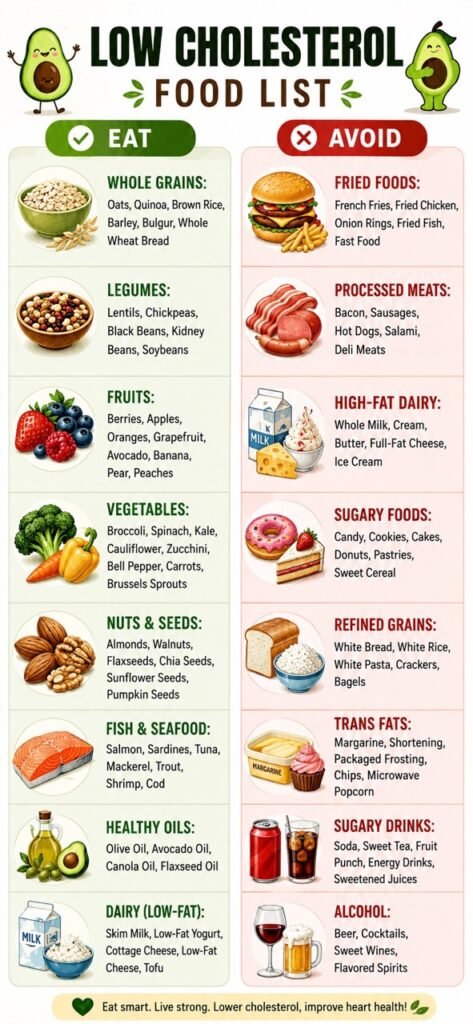
Before you overhaul your kitchen, you need to understand the mechanism. What is it in food that actually changes your cholesterol levels?
Foods That Raise LDL (Limit These)
Saturated fat is the biggest dietary driver of high LDL in most people. It triggers your liver to produce more LDL cholesterol.
You’ll find it in fatty cuts of beef and lamb, butter, lard, ghee, full-fat dairy, coconut oil, palm oil, and processed meats like sausage and salami.
You don’t need to eliminate saturated fat completely — some is fine — but the average person eating a Western diet is getting far too much of it.
Trans fats are the worst thing you can eat for your cholesterol. They raise LDL and simultaneously lower HDL — a double hit. They’re found in partially hydrogenated oils in some packaged baked goods, fried fast food, and margarine. Always check labels for “partially hydrogenated.”
Refined carbohydrates and sugar don’t raise LDL directly, but they spike triglycerides and lower HDL. White bread, white rice, sugary drinks, pastries, candy — all of this contributes to an unfavorable cholesterol picture.
Dietary cholesterol is more nuanced. For most people, food cholesterol (eggs, shellfish) has a modest effect compared to saturated fat. If your doctor has specifically flagged your response to dietary cholesterol, follow their guidance — but for the general population, the bigger priority is reducing saturated fat.
Foods That Lower LDL (Eat More of These)
Soluble fiber is the single most powerful food-based tool you have for lowering LDL. It forms a thick gel in your digestive tract that binds to bile acids (made from cholesterol) and prevents them from being reabsorbed.
Your liver then pulls cholesterol from your blood to make more bile — which drops your LDL. Aim for 10–25 grams of soluble fiber daily for meaningful results.
Omega-3 fatty acids significantly reduce triglycerides and reduce inflammation. Fatty fish is the best source: salmon, mackerel, sardines, trout, and tuna. Flaxseeds, chia seeds, and walnuts contain a plant-based form of omega-3 as well.
Monounsaturated fats — the kind in olive oil, avocados, and almonds — help lower LDL while keeping HDL intact. These are the fats you want to replace saturated fats with.
Plant sterols and stanols are naturally occurring compounds in nuts, seeds, whole grains, and some vegetables. They block cholesterol absorption in the gut. You need about 2g/day to see results — they’re also added to some fortified margarines, orange juices, and yogurts.
| Best Sources of Soluble Fiber | Soluble Fiber Per Serving |
|---|---|
| Oat bran (½ cup dry) | ~4g |
| Rolled oats (½ cup dry) | ~2g |
| Black beans (½ cup cooked) | ~2.4g |
| Lentils (½ cup cooked) | ~1.8g |
| Chickpeas (½ cup cooked) | ~1.5g |
| Apple (1 medium, with skin) | ~1g |
| Psyllium husk (1 tablespoon) | ~5g |
| Ground flaxseed (2 tablespoons) | ~1.5g |
| Avocado (½ medium) | ~2.1g |
Lifestyle Factors That Matter Too
Exercise is one of the best things you can do for your HDL. Regular moderate exercise — 30 minutes, most days of the week — can raise HDL by 3–10% and lower triglycerides. You don’t need to run marathons; brisk walking counts.
Smoking dramatically lowers HDL and damages artery walls, making LDL deposits much more dangerous. Quitting can raise HDL significantly within weeks.
Stress and sleep both affect cholesterol in ways researchers are still unpacking. Chronic stress elevates cortisol, which raises LDL. Poor sleep disrupts lipid metabolism. Both are worth addressing alongside your diet changes.
The Beginner’s Eating Framework
The “Swap, Don’t Starve” Philosophy
You do not need to eat less food. You need to eat different food. The goal is to swap out the things that raise your LDL for things that lower it, while keeping meals satisfying enough that you actually stick with the plan.
Most people fail dietary changes because they frame it as deprivation. They try to cut everything at once, feel miserable for two weeks, and go back to what they were doing before. What works instead: make one or two changes per week until they feel automatic, then build on them. By Day 90, you won’t be “on a diet.” You’ll just eat differently than you used to.
The Cholesterol-Lowering Plate
Here’s a simple way to think about every single meal you build:
| Plate Section | What Goes Here | Examples |
|---|---|---|
| Half your plate | Vegetables, fruits, or legumes | Broccoli, salad greens, lentils, chickpeas, berries, apple slices |
| Quarter of your plate | Whole grains | Brown rice, oats, barley, whole wheat pasta, quinoa |
| Quarter of your plate | Lean protein | Salmon, chicken breast, turkey, beans, tofu, egg |
| Your fat source | Healthy unsaturated fat | Olive oil drizzle, half an avocado, small handful of nuts |
Pantry Staples to Stock Before Day 1
Get these in your kitchen before you start:
- Rolled oats and oat bran
- Canned chickpeas, black beans, kidney beans, and lentils
- Dried red and green lentils
- Brown rice, barley, and quinoa
- Whole grain bread and pasta
- Extra virgin olive oil
- Canned salmon and sardines
- Walnuts, almonds, and ground flaxseed
- Psyllium husk (sold at most pharmacies)
- A variety of fresh and frozen vegetables
- Apples, pears, and citrus fruit
- Low-fat or plant-based milk
- Plain low-fat yogurt
- Garlic, onions, cumin, turmeric, paprika, and herbs
What to Reduce or Remove
| Eat Freely | Eat in Moderation | Minimize or Avoid |
|---|---|---|
| Oats, barley, all beans and lentils | Eggs (up to 1 daily) | Butter and lard |
| All vegetables and most fruits | Lean beef (sirloin, tenderloin) | Processed meats (sausage, salami, hot dogs) |
| Salmon, mackerel, sardines, trout | Low-fat dairy | Full-fat cheese in large amounts |
| Olive oil and avocado | Strong-flavored cheese in small amounts | Fried foods |
| Walnuts, almonds, flaxseed, chia | Coffee (2–3 cups/day is fine) | Sugary drinks and white bread |
| Whole grain bread, pasta, brown rice | Dark chocolate (small amounts, 70%+ cocoa) | Commercial baked goods and snack foods |
| Herbs, spices, garlic, onions | Chicken breast and turkey | Fast food and takeaway fried food |
The 90-Day Structure: How It Works
The 90 days are divided into three phases, each building on the last. The idea is gradual — because gradual is what actually sticks.
| Phase | Days | Focus | Key Habits |
|---|---|---|---|
| Phase 1: Foundation | Days 1–30 | Learn the basics, make the easiest swaps, build habits | Oatmeal daily, swap butter for olive oil, eat beans once a day |
| Phase 2: Build | Days 31–60 | More fiber, more fish, meal prepping introduced | Legumes twice daily, fatty fish 3x/week, Sunday meal prep |
| Phase 3: Lifestyle | Days 61–90 | Refine and maintain; handle real-life situations | Eating out strategy, 80/20 rule, retest at Day 90 |
Phase 1: Days 1–30 (Foundation)
The most important thing in Phase 1 is not perfection. It’s building a few keystone habits that you’ll carry forward. Pick battles you can win.
The three habits to lock in during Phase 1:
- Eat oatmeal for breakfast at least 5 days a week
- Replace butter with olive oil in all your cooking
- Eat beans or lentils in at least one meal per day
That’s it to start. Everything else is secondary.
Week 1 Sample Meal Plan
| Day | Breakfast | Lunch | Dinner | Snack |
|---|---|---|---|---|
| Monday | Rolled oats with sliced apple and ground flaxseed | Lentil soup with whole grain bread | Baked salmon with roasted broccoli and sweet potato | Apple and a handful of almonds |
| Tuesday | Overnight oats with chia seeds and blueberries | Chickpea and vegetable salad with olive oil and lemon | Turkey stir-fry with mixed vegetables over brown rice | A pear or a few clementines |
| Wednesday | Oatmeal with cinnamon, banana, and almond butter | Black bean tacos in whole grain tortillas with avocado | Baked chicken breast with barley and roasted asparagus | Carrot sticks with hummus |
| Thursday | Whole grain toast with mashed avocado and tomato | Lentil and spinach soup | Grilled mackerel or sardines over a big green salad | Walnuts and an orange |
| Friday | Oatmeal with mixed berries and flaxseed | Whole grain wrap with turkey, avocado, lettuce, mustard | Chickpea and spinach vegetable curry over brown rice | Plain low-fat yogurt with honey and walnuts |
| Saturday | Banana oat pancakes (blended banana, eggs, oats) | Quinoa salad with chickpeas, cucumber, tomato, olives | Baked salmon with green beans and roasted potatoes | Apple with almond butter |
| Sunday | Oatmeal with orange zest, dried cranberries, pumpkin seeds | Bean and vegetable soup | Chicken thighs (skin removed) with roasted root vegetables | Hummus with sliced bell peppers |
Week 2 Sample Meal Plan
By Week 2 the oatmeal habit should be forming. Now focus on adding more fish — aim for two portions this week. Try sardines at least once (they’re cheap, packed with omega-3, and actually great with lemon and herbs).
| Day | Breakfast | Lunch | Dinner | Snack |
|---|---|---|---|---|
| Monday | Oatmeal with cinnamon, diced apple, and crushed walnuts | Lentil tacos in whole grain tortillas with salsa | Pan-seared salmon with sautéed kale and brown rice | Pear and a handful of almonds |
| Tuesday | Smoothie with oat milk, banana, frozen spinach, flaxseed | Chickpea soup with garlic, tomatoes, cumin, and lemon | Turkey meatballs in tomato sauce over whole grain pasta | Celery with almond butter |
| Wednesday | Overnight oats with chia seeds, oat milk, and peach | Grain bowl with brown rice, chickpeas, avocado, tahini | Baked white fish with roasted zucchini | A banana |
| Thursday | Oatmeal with mixed berries and 1 tbsp psyllium husk | Black bean and avocado wrap | Chicken and vegetable soup with barley | Orange and walnuts |
| Friday | Whole grain toast with almond butter and banana | Sardine and tomato salad over arugula with olive oil | Vegetarian chili with kidney beans, corn, and peppers | Apple and almonds |
| Saturday | Oat bran porridge with dried apricots and honey | Chickpea and vegetable salad with lemon dressing | Grilled salmon with asparagus and sweet potato | Low-fat Greek yogurt with berries |
| Sunday | Oatmeal with orange, chia seeds, and almond butter | Leftover chili (always better day two) | Roasted chicken thighs (skin off) with Brussels sprouts | A small pear |
Week 3 Sample Meal Plan
Week 3 is where you start to feel the rhythm. You know what you’re buying, you have a sense of which meals you like, and the oatmeal habit is probably automatic. Add a tablespoon of psyllium husk to one drink or meal every single day this week if you aren’t already — you won’t taste it, but it’ll meaningfully boost your soluble fiber intake.
| Day | Breakfast | Lunch | Dinner | Snack |
|---|---|---|---|---|
| Monday | Oatmeal with strawberries and ground flaxseed | White bean soup with kale and garlic | Baked trout with roasted tomatoes and brown rice | Mixed unsalted nuts |
| Tuesday | Smoothie with oat milk, banana, mango, psyllium husk | Mediterranean wrap with hummus, roasted eggplant, cucumber | Lentil bolognese over whole grain pasta | Apple with almond butter |
| Wednesday | Overnight oats with chia seeds and blueberries | Chicken and barley salad with fresh herbs and lemon dressing | Prawn and vegetable stir-fry over brown rice | Carrot sticks and hummus |
| Thursday | Oatmeal with banana and cinnamon | Red lentil soup (big batch — eat a few days in a row) | Turkey burger on whole grain bun with avocado and mustard | A pear |
| Friday | Whole grain toast with avocado and smoked salmon | Lentil soup from the batch | Grilled mackerel with tomato and herb salad | Low-fat yogurt with honey and walnuts |
| Saturday | Banana oat pancakes with fresh berries | Big salad with chickpeas, mixed vegetables, and olive oil dressing | Salmon and sweet potato fishcakes with green salad | Orange and almonds |
| Sunday | Oat bran porridge with pear and flaxseed | Batch cook: lentil soup, brown rice, roasted vegetables | Roasted chicken with root vegetables and steamed greens | A handful of walnuts |
Week 4 Sample Meal Plan
Almost at Day 30. This week, focus on one specific thing: increase the volume of vegetables in every meal. More vegetables means more fiber, more antioxidants, and more fullness — which naturally crowds out the less-healthy choices without you having to think about it.
| Day | Breakfast | Lunch | Dinner | Snack |
|---|---|---|---|---|
| Monday | Oatmeal with mixed berries, flaxseed, and psyllium husk | Big vegetable and bean soup (use whatever’s in the fridge) | Baked salmon with a large tray of roasted mixed vegetables | Apple with almond butter |
| Tuesday | Smoothie with oat milk, banana, frozen berries, flaxseed | Lentil and roasted vegetable wrap | Chicken and chickpea tagine over couscous or brown rice | Mixed nuts |
| Wednesday | Overnight oats with chia seeds and banana | Lentil soup from this week’s batch | Tuna and white bean salad over arugula with olive oil | Carrot and cucumber sticks with hummus |
| Thursday | Oatmeal with orange zest, dried apricots, pumpkin seeds | Grain bowl with quinoa, roasted sweet potato, black beans, avocado | Turkey meatballs in tomato sauce over whole grain pasta | A pear |
| Friday | Whole grain toast with almond butter and sliced strawberries | Chickpea salad sandwich on whole grain bread | Baked salmon with steamed broccoli and brown rice | Greek yogurt with honey and walnuts |
| Saturday | Oatmeal with blueberries and almond butter | Homemade lentil burgers on whole grain buns | Grilled shrimp skewers with roasted bell peppers and quinoa | Apple and almonds |
| Sunday | Oatmeal with banana, cinnamon, and flaxseed | Big batch vegetable and bean soup | Roasted salmon with sweet potato and Brussels sprouts | Walnuts and an orange |
What to Expect at Day 30
At the end of Phase 1, you probably won’t feel dramatically different yet — and that’s completely normal. Cholesterol changes are happening at a cellular level.
The visible results come later. What you might notice by Day 30: better digestion, feeling fuller for longer after meals, and less of a sugar crash in the afternoon. The key is that you’ve built the habits. Phase 2 is where you expand them.
Phase 2: Days 31–60 (Build and Expand)
You’ve got the basics down. Now deliberately increase your soluble fiber, add more variety, and introduce meal prepping so that eating well becomes easier, not harder.
The three habits to add in Phase 2:
- Eat legumes (beans, lentils, chickpeas) at least twice per day instead of once
- Eat fatty fish three times per week
- Prep at least one component of the week’s meals on Sunday
Meal Prep Sunday: Your Secret Weapon
The single biggest reason people fall off healthy eating is convenience. When you’re tired and hungry, you eat whatever’s fastest. Fix this by having good food already ready.
Each Sunday, spend 45–60 minutes doing these four things:
- Cook a big pot of grains (brown rice, barley, or quinoa)
- Make a batch of lentil soup or bean stew
- Roast a large tray of mixed vegetables
- Wash and chop vegetables and fruit for snacking
With these ready, assembling a cholesterol-lowering meal on a Tuesday night takes ten minutes. That’s the difference between sticking with it and not.
Week 5 Sample Meal Plan
| Day | Breakfast | Lunch | Dinner | Snack |
|---|---|---|---|---|
| Monday | Oatmeal with apple, flaxseed, psyllium husk | White bean and kale soup (made on Sunday) | Baked salmon with Sunday’s roasted vegetables and brown rice | Walnuts and a pear |
| Tuesday | Overnight oats with chia seeds and mixed berries | Quinoa bowl with roasted vegetables, chickpeas, tahini | Lentil dal with spinach over brown rice | Apple with almond butter |
| Wednesday | Smoothie with oat milk, banana, spinach, flaxseed | Sardines on whole grain toast with tomato and red onion | Turkey stir-fry with broccoli, snap peas, and brown rice | Carrot sticks with hummus |
| Thursday | Oatmeal with banana and almond butter | Leftover lentil dal | Baked cod with chickpea and tomato stew | Orange and almonds |
| Friday | Oat bran porridge with pear and cinnamon | Black bean and avocado wrap | Grilled salmon with steamed green beans and salad | Greek yogurt with berries |
| Saturday | Oatmeal with blueberries and psyllium husk | Homemade baked falafels in whole grain pita with tahini | Mackerel in tomato sauce with roasted potatoes and broccoli | Mixed nuts |
| Sunday | Banana oat pancakes with fresh fruit | Improvised grain bowl from leftovers | Chicken and vegetable soup with barley (make a big pot) | Pear and walnuts |
Weeks 6–8: Expanding Your Range
By Weeks 6–8, you should feel comfortable mixing and matching from everything you’ve learned. Keep the same structure — oats in the morning, legumes twice daily, fish three times a week — and experiment with more variety. Here are new ideas to rotate in:
| Meal Type | New Ideas to Try in Weeks 6–8 |
|---|---|
| Breakfasts | Savory oats with vegetable broth and a poached egg; chia pudding with mango; warm barley porridge with apple and cinnamon |
| Lunches | Black bean soup with lime; Moroccan chickpea and vegetable stew; edamame and quinoa bowl with miso dressing |
| Dinners | Lentil shepherd’s pie with sweet potato topping; fish tacos with shredded cabbage and avocado; tofu and vegetable curry; lentil and vegetable stuffed peppers |
What to Expect at Day 60
Most people who’ve followed Phase 1 and Phase 2 consistently notice noticeably better energy levels, improved digestion, some weight loss (especially coming from a processed-food diet), and a general sense of feeling lighter. If you were to retest your cholesterol right now, you’d likely already see some improvement. Hold off until Day 90 for a true before-and-after picture.
Phase 3: Days 61–90 (Lifestyle Mode)
Phase 3 is about integration. You’ve built the habits. Now you deal with real life — restaurants, dinner parties, family events, and days when you genuinely have no energy to cook anything thoughtful.
How to Eat Out Without Losing Progress
Most restaurants can accommodate a cholesterol-lowering approach without any drama. A few simple principles:
- Fish is almost always an option. Even at steakhouses. Get it grilled, not fried, and ask for sauce on the side.
- Ask for olive oil instead of butter. Most kitchens will do this without question.
- Skip the bread basket or choose whole grain if it’s available.
- Get extra vegetables instead of fries. By this point in the plan you’ll actually want them.
- Salad with grilled protein is a reliable default. Dressing on the side. Vinaigrette over creamy.
- Restaurant portions are enormous. Eat half, take the rest home.
The 80/20 Rule for Social Events
Here’s what nobody says in diet guides: you’re going to eat the slice of cake at your friend’s birthday. And that’s fine. The 80/20 rule means you eat the way this plan outlines at least 80% of the time. The other 20% is life. A glass of wine, a piece of birthday cake, your mom’s lasagna — these things are not going to ruin your cholesterol numbers if the rest of your week is solid.
What does ruin your numbers is letting one dinner party turn into “I’ll restart on Monday,” which turns into six weeks of eating exactly as you did before. One off-day means nothing. A pattern of off-days means everything.
Fast Meals for Low-Energy Days
Always have at least two or three of these on hand. They’re not glamorous but they keep you on track when your motivation is zero:
| Meal | Time | Why It Works |
|---|---|---|
| Canned lentil or chickpea soup + whole grain bread | 5 minutes | Ready-made soluble fiber, no cooking required |
| Canned sardines or mackerel on whole grain toast | 5 minutes | Instant omega-3 hit, incredibly filling |
| Rolled oats with a banana | 3 minutes | The best breakfast there is, and it takes no thought |
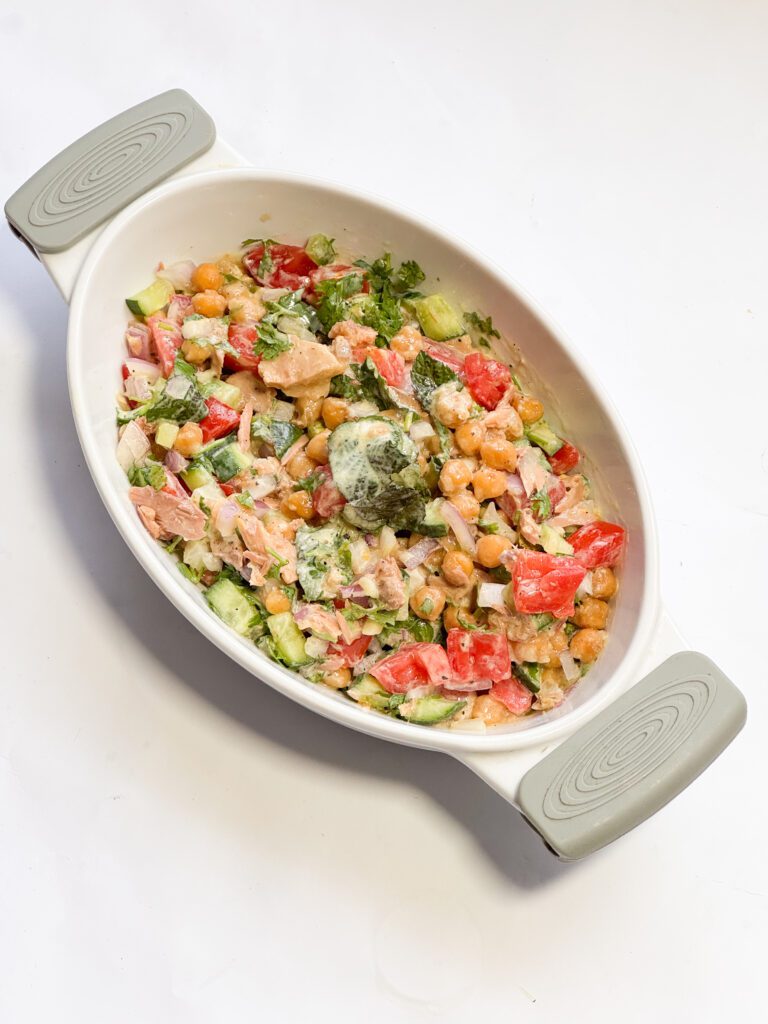
| Canned tuna + white beans + olive oil + lemon over bagged salad | 10 minutes | High protein, high fiber, zero cooking |
| Frozen edamame + batch-cooked brown rice + soy sauce | 10 minutes | Plant protein, complete amino acids, very filling |
| Walnuts, apple, and hummus with raw vegetables | 0 minutes | No cooking at all — soluble fiber + healthy fat |
Weeks 9–12 Sample Meal Plans
By this stage you should be building your own weekly plan from what you know you enjoy. Here are two weeks to guide you through the final stretch.
| Day | Breakfast | Lunch | Dinner | Snack |
|---|---|---|---|---|
| Monday | Oatmeal with berries and flaxseed | Lentil soup | Baked salmon with green vegetables | Walnuts |
| Tuesday | Overnight oats with banana | Chickpea grain bowl with tahini | Turkey stir-fry over brown rice | Apple and almonds |
| Wednesday | Smoothie with flaxseed and psyllium husk | Sardines on whole grain toast | Lentil dal with spinach | Carrot and hummus |
| Thursday | Oatmeal with apple and cinnamon | White bean and kale soup | Baked cod with chickpea tomato stew | A pear |
| Friday | Avocado toast with smoked salmon | Quinoa salad with chickpeas and olive oil | Mackerel with roasted potatoes and salad | Greek yogurt with berries |
| Saturday | Banana oat pancakes | Baked falafels in whole grain pita | Grilled salmon with sweet potato | Mixed nuts |
| Sunday | Oat bran porridge with pear | Improvised big salad from the fridge | Chicken and barley soup (big batch for the week) | Orange and walnuts |
| Day | Breakfast | Lunch | Dinner | Snack |
|---|---|---|---|---|
| Monday | Oatmeal with apple and flaxseed | Black bean soup with lime | Grilled salmon with broccoli | Almonds |
| Tuesday | Chia pudding with mango | Mediterranean wrap with hummus | Turkey meatballs with whole grain pasta | Apple and almond butter |
| Wednesday | Smoothie with oat milk, banana, spinach | Tuna and white bean salad over greens | Lentil shepherd’s pie with sweet potato top | Carrot and hummus |
| Thursday | Oatmeal with banana and cinnamon | Leftover soup | Chickpea and tomato stew with baked fish | A pear |
| Friday | Avocado toast with smoked salmon | Chickpea salad on whole grain bread | Mackerel with roasted vegetables | Greek yogurt with honey |
| Saturday | Savory oats with a poached egg and spinach | Grain bowl with roasted vegetables and tahini | Homemade lentil burgers on whole grain buns | Mixed nuts |
| Sunday | Barley porridge with apple and cinnamon | Leftover soup | Roasted chicken with greens and brown rice | Walnuts and orange |
What to Expect at Day 90
Get your blood tested at Day 90. Most people following a consistent cholesterol-lowering eating plan see LDL reduction of 10–20% (sometimes more, especially if they also increased exercise), triglyceride reduction of 20–30% (particularly if refined carbs and sugar were cut), and a modest HDL increase. Book the appointment with your doctor, tell them exactly what you’ve been doing, and review the results together.
5 Core Recipes to Learn By Heart
You don’t need 50 recipes. You need five that you know so well you can make them without thinking. These are the workhorses of the entire 90 days.
1. Basic Oatmeal (That Doesn’t Taste Like Cardboard)
Half a cup of rolled oats, one cup of low-fat milk or oat milk, a pinch of salt. Medium heat, stir frequently, about five minutes until creamy. Always add toppings — fruit for sweetness, a tablespoon of nut butter or ground flaxseed for staying power. The mistake most people make with oatmeal is eating it plain. Load it up. The more fruit and nuts you add, the better it tastes and the more cholesterol-lowering fiber you get.
2. Red Lentil Soup
Sauté one diced onion and four cloves of garlic in olive oil until soft. Add a teaspoon each of cumin, coriander, and turmeric. Stir in 1.5 cups of rinsed red lentils and 1 litre of vegetable broth. Bring to a boil, reduce to a simmer, cook 20–25 minutes until the lentils dissolve into a thick golden soup. Season with salt, pepper, and plenty of lemon juice. Makes 4–5 servings. Keeps in the fridge for 5 days. This is probably the single most useful recipe in the plan.
3. Simple Pan-Seared Salmon
Pat the fillet dry. Season with salt, pepper, garlic powder, and paprika. Heat a teaspoon of olive oil in a non-stick pan over medium-high heat. Salmon skin-side down, cook 4 minutes. Flip, cook another 2–3 minutes depending on thickness. Squeeze lemon over the top. The whole thing takes less than ten minutes and is one of the best things you can eat for your cholesterol profile.
4. White Bean and Kale Soup
Fry garlic and onion in olive oil. Add a can of diced tomatoes, a can of rinsed white beans, and vegetable broth. Simmer 15 minutes. Add a handful of chopped kale and cook another 5 minutes. Season with salt, pepper, and lemon. Serve with whole grain bread. Extremely high in soluble fiber and fills you up properly.
5. Overnight Oats
The night before: combine half a cup of rolled oats, one cup of oat milk, one tablespoon of chia seeds, and whatever fruit you want in a jar. Stir, lid on, fridge overnight. In the morning, it’s ready. Add a spoonful of nut butter on top if you want extra staying power. Two minutes of work the night before means zero cooking the next morning.
Frequently Asked Questions
Can I eat eggs?
Yes, for most people. Current guidelines allow up to one egg per day as part of a heart-healthy diet. The egg-cholesterol link was overstated for decades — the science has shifted. If your doctor has specifically told you to limit eggs because of your individual response to dietary cholesterol, follow their advice. But for the general population, an egg a day is not a problem.
What about cheese?
Cheese is high in saturated fat, which raises LDL, so you don’t want to pile it on everything. But you don’t need to eliminate it. Use strong-flavored cheeses (sharp cheddar, parmesan, feta) in smaller amounts so you get the flavor without as much fat. A small amount of really flavorful cheese is far better than a large amount of mild cheese.
Is this safe if I’m on statins?
Yes, and combining dietary changes with statin therapy typically produces better results than either alone. Always tell your doctor what changes you’re making. One specific note: if you eat large amounts of grapefruit regularly, mention it — grapefruit can interact with some statins.
Can I still eat meat?
Yes. Choose leaner cuts. Chicken breast and turkey are lowest in saturated fat. Lean beef (sirloin, tenderloin) in moderate amounts is fine. Processed and red meat eaten in large amounts regularly is where the problems come from — not the occasional steak.
How quickly will my numbers improve?
Measurable changes in LDL can appear in as little as 4–6 weeks. At 8–12 weeks you’ll see the full effect of consistent dietary changes. The 90-day timeline in this plan is specifically designed to get you to a meaningful before-and-after measurement point.
What if I slip up?
You start the next meal over. Not the next day. Not Monday. The next meal. One bad meal, one bad day, one rough week — none of it erases the progress you’ve built. The only way this plan fails is if you quit entirely.
Tracking Your Progress
You Don’t Need an App
A simple handwritten food journal works better than most apps for this purpose. You don’t need to count calories or track macros precisely. Each day, just jot down what you ate, whether you hit your oatmeal, legumes, and fish targets, and any slip-ups along with what triggered them. Over 90 days, this becomes an incredibly useful document — you’ll start seeing exactly which meals keep you full, which situations lead to poor choices, and which foods you genuinely enjoy versus force yourself through.
Daily Targets Checklist
| Target | Phase 1 (Days 1–30) | Phase 2 (Days 31–60) | Phase 3 (Days 61–90) |
|---|---|---|---|
| Oatmeal or oat bran | 5 days/week | Daily | Daily |
| Beans or lentils | Once daily | Twice daily | Twice daily |
| Fatty fish | Twice/week | Three times/week | Three times/week |
| Vegetables | 3 servings/day | 4+ servings/day | 4+ servings/day |
| Fruit | 2 servings/day | 2 servings/day | 2 servings/day |
| Psyllium husk | Optional | Daily | Daily |
| Butter-free cooking | Start this week 1 | Every meal | Every meal |
Non-Scale Wins to Track
Cholesterol is invisible. You can’t feel it dropping. But there are other changes that tell you the plan is working: better energy levels throughout the afternoon, improved digestion and regularity, less intense sugar cravings, better sleep quality, and how your clothes fit. These are real, meaningful signals. Celebrate them — don’t wait only for the blood test to tell you something’s working.
When to Retest
Get your cholesterol retested at Day 90. Fast for 9–12 hours beforehand (water is fine) to get accurate fasting lipid levels. Write down the specific changes you made so you can explain them clearly to your doctor. If your numbers improved significantly, discuss whether to continue the diet approach alone or whether additional interventions would be beneficial. If numbers didn’t improve as much as expected, that’s also important information — some people’s cholesterol is more heavily genetically determined and may require medication alongside diet changes.
The Bottom Line
Ninety days is not a long time. It’s three months. In three months you can genuinely change the trajectory of your cardiovascular health — sometimes by enough to avoid or reduce medication, always by enough to do your heart some real good.
The plan works because it’s not built on willpower. It’s built on habits — small, specific, manageable behaviors that compound over time. By Day 90, eating this way won’t feel like discipline. It’ll just feel like how you eat.
Start with oatmeal. Add beans. Eat more fish. Use olive oil. Let the rest follow.
Quick Reference: Cholesterol-Lowering Food Guide
| Category | Best Choices | Why It Helps |
|---|---|---|
| Grains | Oats, oat bran, barley, brown rice, quinoa, whole grain bread and pasta | High in soluble fiber — lowers LDL directly |
| Legumes | Lentils, black beans, chickpeas, kidney beans, white beans, edamame | Soluble fiber + plant protein — replaces saturated-fat protein sources |
| Fish | Salmon, mackerel, sardines, trout, tuna | Omega-3 fatty acids lower triglycerides and reduce inflammation |
| Fats | Olive oil, avocado, walnuts, almonds, ground flaxseed, chia seeds | Monounsaturated and polyunsaturated fats replace saturated fat |
| Fruits | Apples, pears, citrus, berries, banana | Soluble fiber (pectin) + antioxidants |
| Vegetables | All vegetables — especially leafy greens, broccoli, Brussels sprouts, carrots | Fiber, antioxidants, low calorie density |
| Protein | Chicken breast, turkey, tofu, eggs (in moderation) | Lean protein with low saturated fat |
| Extras | Psyllium husk, green tea, dark chocolate (70%+) | Psyllium: very high soluble fiber; green tea: antioxidants; dark chocolate: flavonoids |