Pesto Penne Pasta with Zucchini, Green Peas and Basil
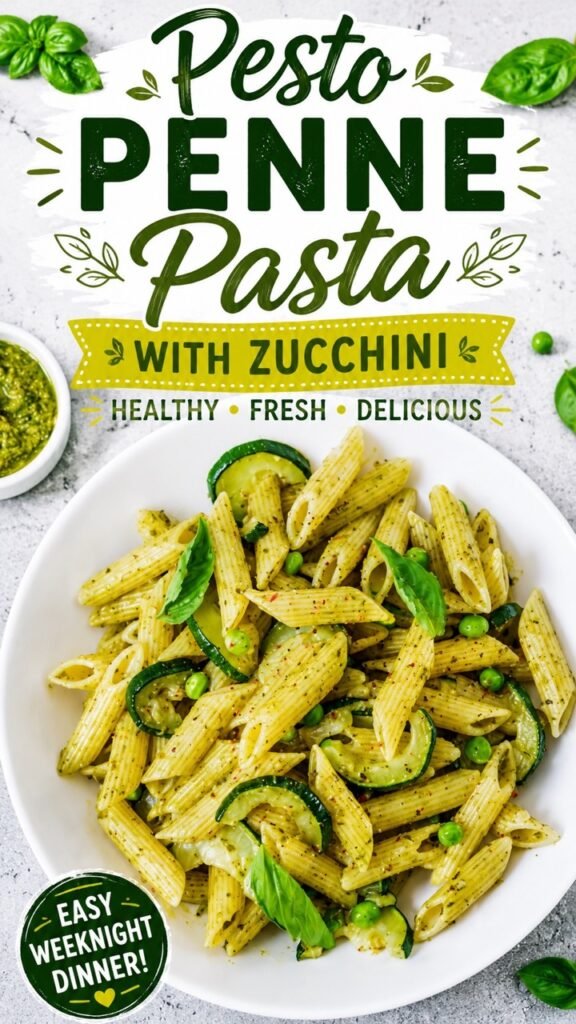
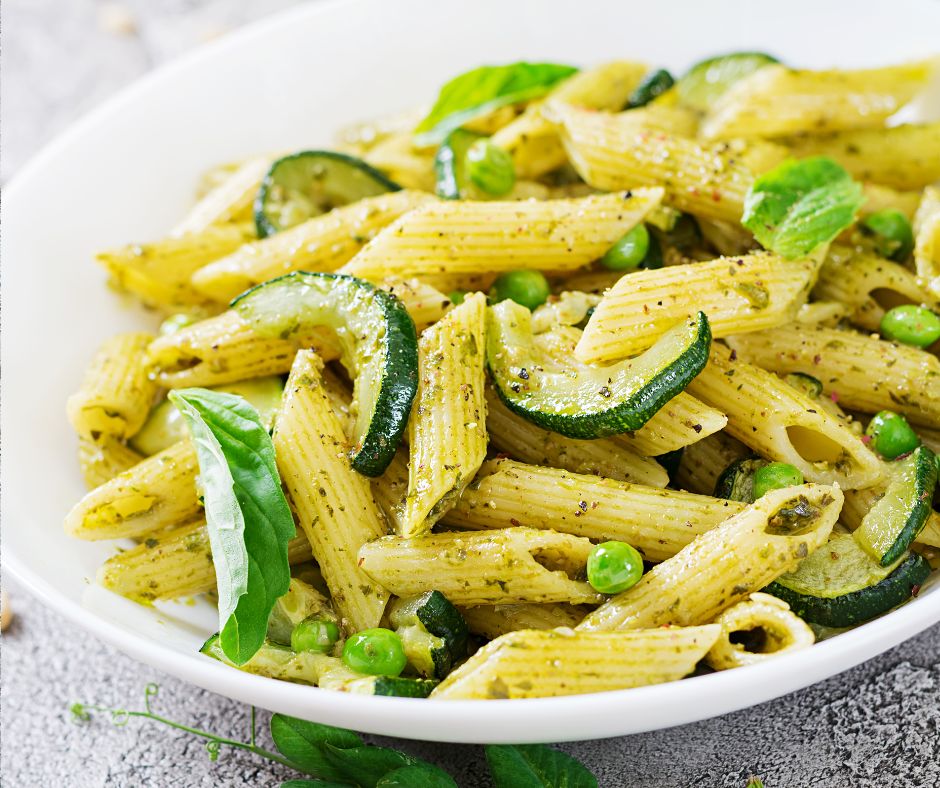
Pesto Penne Pasta with Zucchini, Green Peas, and Basil is the kind of meal that feels fresh, light.
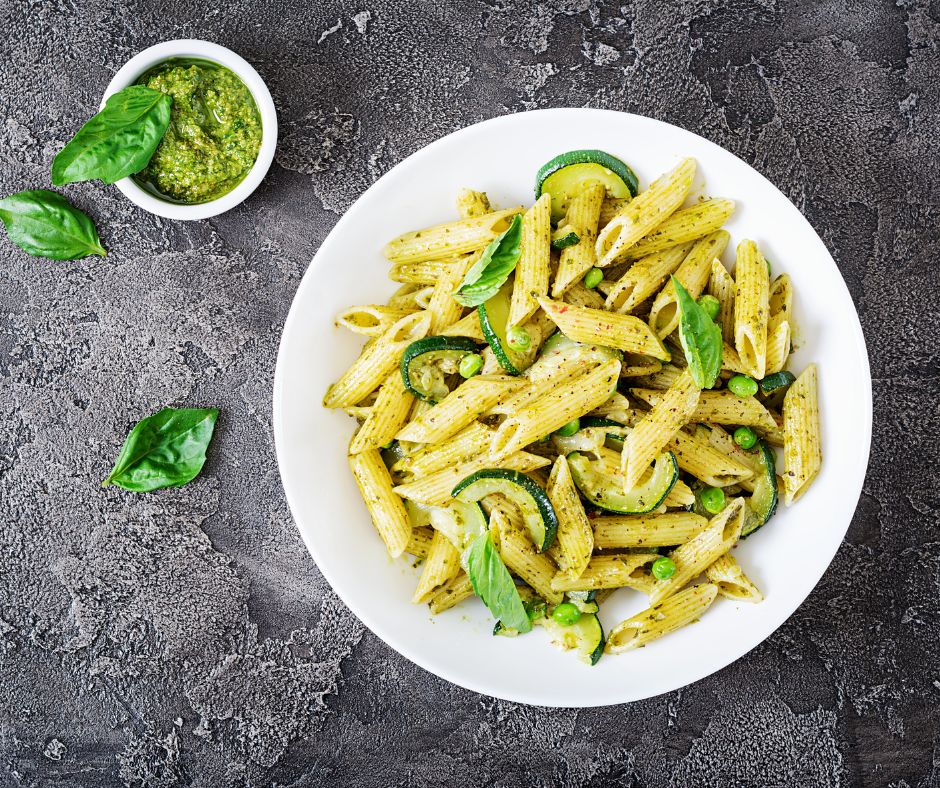
It’s a simple recipe that comes together quickly, making it perfect dinner for busy weeknights when you want something homemade without spending hours in the kitchen.
It works especially well in summer when zucchini is cheap and plentiful, but frozen peas and a jar of good refrigerated pesto make it a reasonable option any time of year.
Serve it as a meatless main dish, a light lunch, or a flavorful side for grilled chicken, fish, or shrimp. Whether you’re looking for an easy family dinner, a vegetarian pasta recipe, or a make-ahead meal prep option, this Penne Pesto Pasta is always a delicious choice.
If you love this, you’ll also want to try:
Stuffed Cherry Tomatoes with Pesto and Basil
Easy Gigi Hadid Pasta
Easy One Pot Creamy Tomato Pasta
Viral Anna Pauls Turkish Pasta
Healthy Bruschetta Chicken Pasta
Ingredients You’ll Need
 Print
Print
Ingredients
12 oz penne pasta
1/3 cup basil pesto (store-bought or homemade)
2 medium zucchini, diced
1 cup green peas (fresh or frozen)
1/4 cup fresh basil leaves, torn
2 tablespoons olive oil
3 cloves garlic, minced
1/2 cup grated Parmesan cheese
Salt and black pepper to taste
1/4 teaspoon red pepper flakes (optional)
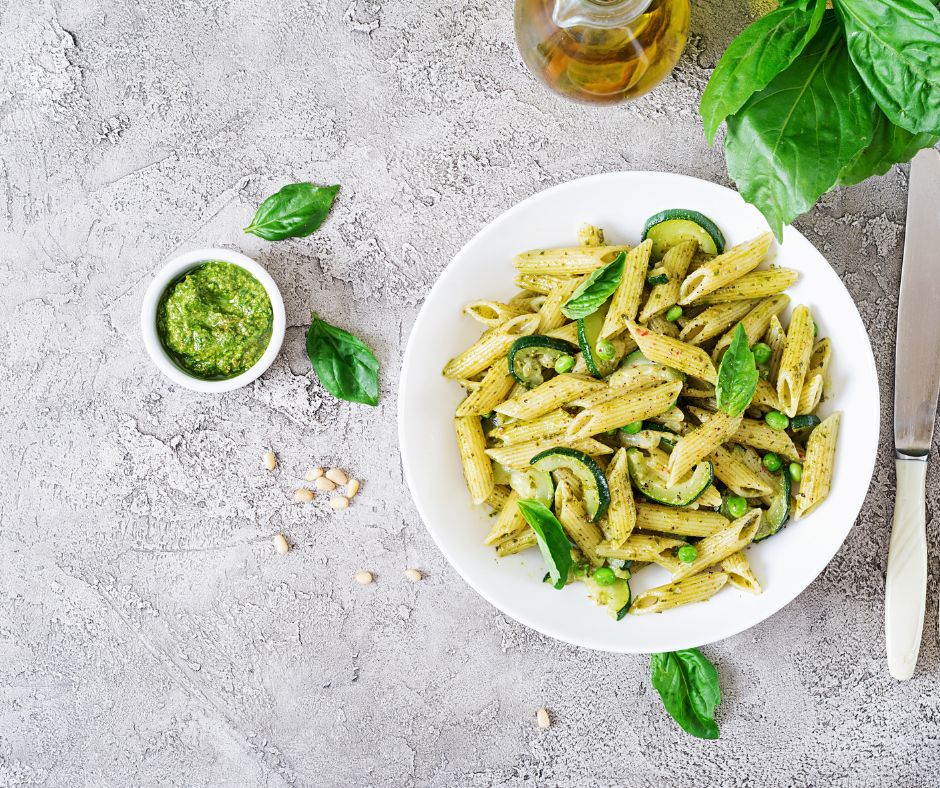
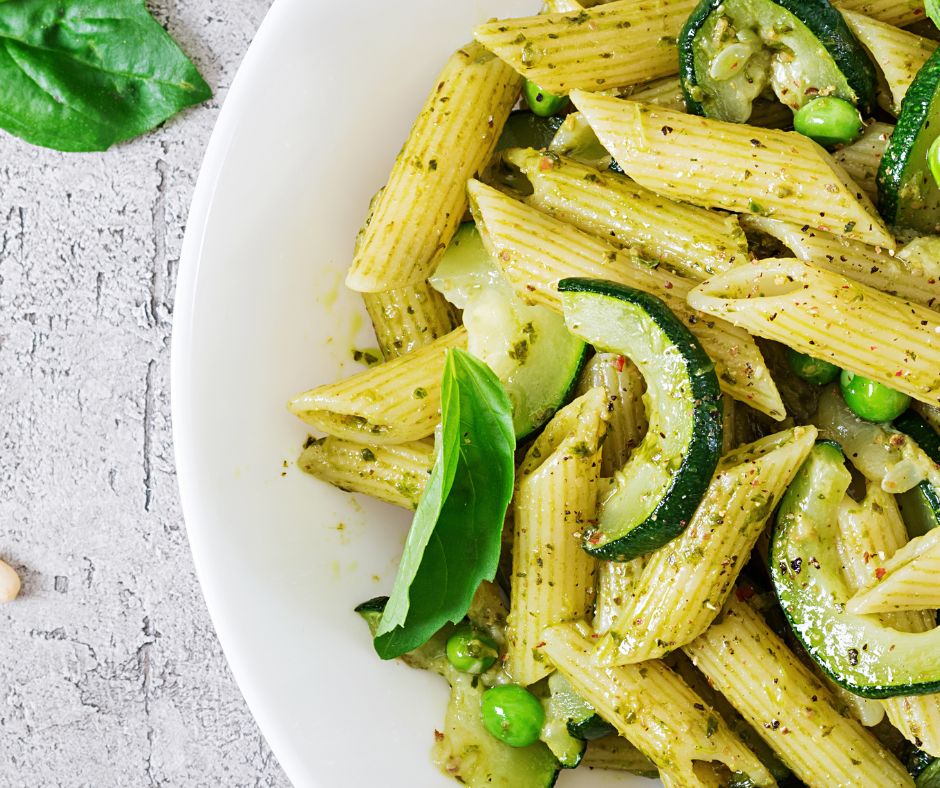
You need penne pasta (the ridged kind grips pesto better than smooth), fresh or frozen green peas, zucchini, and a solid basil pesto.
Homemade is great, but a refrigerated store-bought pesto works just as well here. Fresh basil leaves for finishing are worth it since they brighten the whole dish.
Directions
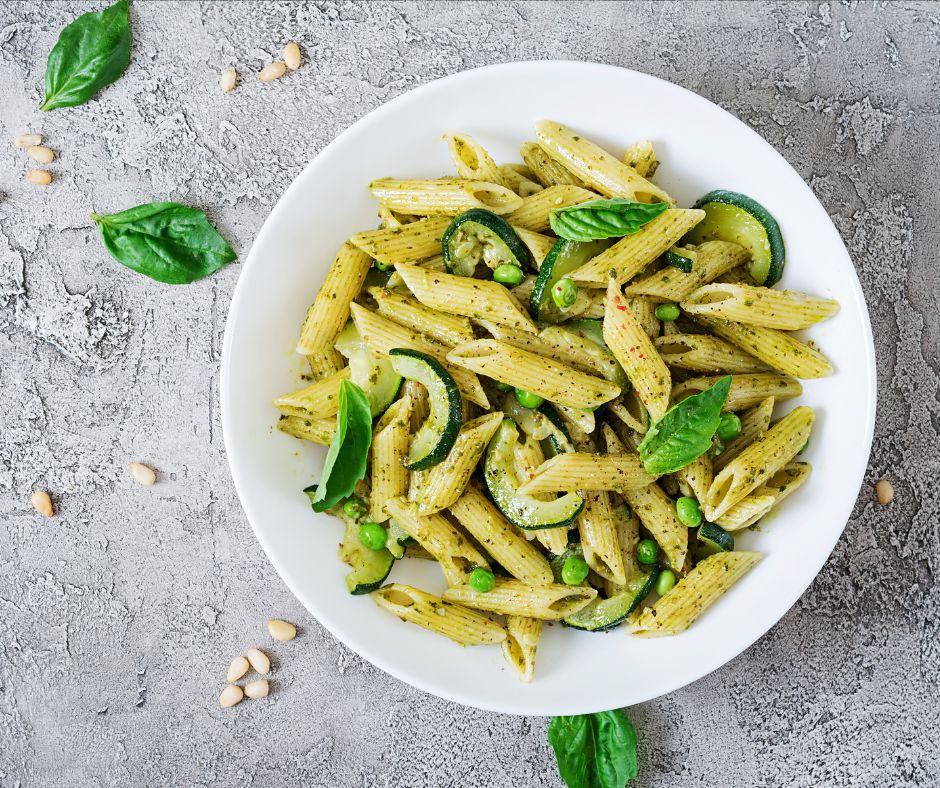
- Bring a large pot of generously salted water to a boil and cook the penne according to package directions until al dente, usually 10 to 11 minutes.
About a minute before you drain it, scoop out 1/2 cup of pasta water and set it aside.
This starchy water is what keeps the pesto sauce loose and clingy rather than thick and clumped.
Drain the pasta and set it aside. - Heat 2 tablespoons of olive oil in a large skillet over medium-high heat while the pasta finishes cooking.
Add the diced zucchini in a single layer and leave it alone for 2 to 3 minutes (you want browning on the cut sides, not steaming).
Once the edges go golden, stir and cook another 2 minutes, then add the minced garlic and cook 30 seconds more until fragrant.
The browning step is where the zucchini picks up flavor, so don’t rush it. - Add the green peas to the skillet and stir to combine with the zucchini.
Frozen peas thaw quickly from the pan heat, usually within a minute.
Cook another 2 minutes until everything is heated through and the peas are bright green, then remove the pan from heat. - Add the drained penne to the skillet and spoon the pesto sauce over the top.
Toss everything together, adding the reserved pasta water a splash at a time until the pesto coats the penne evenly.
Usually 3 to 4 tablespoons does the job.
Taste and season with salt, black pepper, and red pepper flakes if you want a little heat. - Scatter the torn basil leaves over the top and finish with grated Parmesan and a small drizzle of olive oil.
Serve right away.
Pesto pasta soaks in fast, and after 10 to 15 minutes it gets sticky and the flavors flatten.
- Serve u0026 Enjoy!
Important Recipe Notes
- Don’t skip saving pasta water. The starch makes the pesto coat the pasta instead of pooling at the bottom. A regular splash of tap water won’t do the same thing.
- Brown the zucchini, don’t steam it. Too much stirring and the zucchini releases moisture and goes soft. Leave it alone in the pan until it starts to color; it only takes a few minutes but makes a real difference in texture and flavor.
- Refrigerated pesto beats shelf-stable. The jarred shelf-stable versions tend to taste flat and oily. The refrigerated kind (near the fresh pasta at most grocery stores) is much closer to homemade.
- Leftovers need a little help reheating. Cold pesto pasta clumps and goes dry. Add a tablespoon of olive oil or water to the pan, heat low and slow, and stir gently until it loosens back up.
- Parmesan adds salt, so taste first. Most store-bought pestos already carry a fair amount of sodium, and Parmesan adds more. Season at the end rather than throughout.
- Make-ahead option. Cook the pasta and vegetables up to a day ahead and refrigerate separately. When ready to eat, reheat the vegetables in a pan, add the pasta, toss with pesto, and finish with fresh basil.
- Frozen vs. fresh green peas. Both work well. Fresh peas in early summer are sweeter and a bit firmer. Frozen peas are fine the rest of the year and go straight into the pan without thawing.
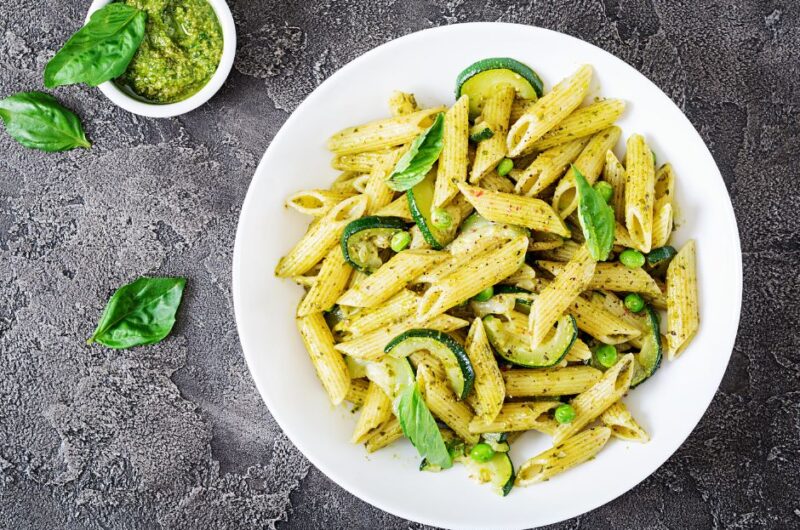
Penne Pasta with Pesto Sauce, Zucchini, Green Peas and Basil
Course: Recipes4
servings10
minutes20
minutes480
kcalIngredients
12 oz penne pasta
1/3 cup basil pesto (store-bought or homemade)
2 medium zucchini, diced
1 cup green peas (fresh or frozen)
1/4 cup fresh basil leaves, torn
2 tablespoons olive oil
3 cloves garlic, minced
1/2 cup grated Parmesan cheese
Salt and black pepper to taste
1/4 teaspoon red pepper flakes (optional)
Directions
- Cook penne in salted boiling water until al dente, reserve 1/2 cup pasta water, then drain.
- Saute diced zucchini in olive oil until golden, then add garlic and cook 30 seconds.
- Add green peas to the skillet and cook until heated through and bright green.
- Toss drained penne with pesto sauce and reserved pasta water until evenly coated, then season to taste.
- Top with fresh basil and Parmesan, then serve immediately.
Notes
- Cook the pasta until al dente so it holds its texture when mixed with the pesto.
- Reserve ½ cup of pasta water before draining. A splash helps loosen the pesto and create a silky sauce.
- Avoid overheating the pesto after adding it to preserve its fresh basil flavor and bright green color.
- Add grilled chicken, shrimp, or white beans for extra protein.